


Exploring the sleep stages
This resource explores the different stages of sleep, outlining their unique roles in physical recovery, emotional processing, memory, and learning.
It is designed to support therapists in delivering psychoeducation around sleep cycles, and initiating meaningful discussions with young people about how sleep impacts their well-being.
Free

Exploring the sleep stages
Free
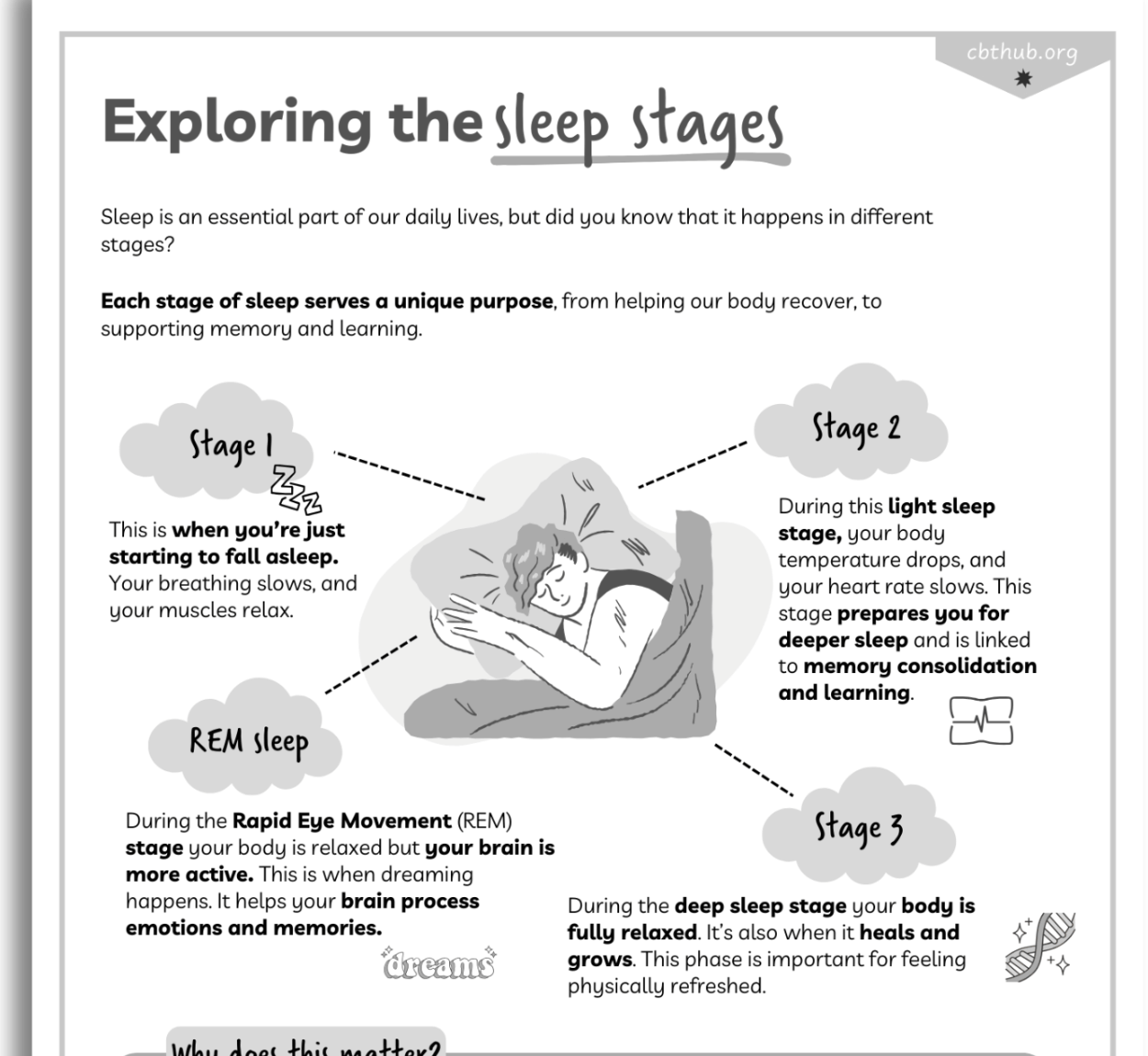
Exploring the sleep stages
References and Further Reading
- Dewald-Kaufmann, J., de Bruin, E. and Michael, G. (2022) ‘Cognitive behavioral therapy for insomnia in school-aged children and adolescents’, Sleep Medicine Clinics, 17(3), pp. 355–365. doi:10.1016/j.jsmc.2022.06.003.
- Keuppens, L. et al. (2023a) ‘Sleep intervention as symptom treatment for ADHD (siesta)-blended CBT sleep intervention to improve sleep, ADHD symptoms and related problems in adolescents with ADHD: Protocol for a randomised controlled trial’, BMJ Open, 13(4). doi:10.1136/bmjopen-2022-065355.
- Gradisar, M. et al. (2011a) ‘A randomized controlled trial of cognitive-behavior therapy plus bright light therapy for adolescent delayed sleep phase disorder’, Sleep, 34(12), pp. 1671–1680. doi:10.5665/sleep.1432.
- Dewald-Kaufmann, J., de Bruin, E. and Michael, G. (2019) ‘Cognitive behavioral therapy for insomnia (CBT-I) in school-aged children and adolescents’, Sleep Medicine Clinics, 14(2), pp. 155–165. doi:10.1016/j.jsmc.2019.02.002.
- Åslund, L. et al. (2020) ‘Cognitive-behavioral therapy for insomnia in adolescents with comorbid psychiatric disorders: A clinical pilot study’, Clinical Child Psychology and Psychiatry, 25(4), pp. 958–971. doi:10.1177/1359104520929376.
- Ma, Z.-R., Shi, L.-J. and Deng, M.-H. (2018) ‘Efficacy of cognitive behavioral therapy in children and adolescents with insomnia: A systematic review and meta-analysis’, Brazilian Journal of Medical and Biological Research, 51(6). doi:10.1590/1414-431×20187070.
- Sukiennik, O. et al. (2024) ‘Changes to sleep patterns and insomnia symptoms following cognitive behavioural therapy for anxiety disorders in adolescents’, Behavioural and Cognitive Psychotherapy, 52(5), pp. 522–534. doi:10.1017/s1352465824000195.