


Putting therapy into action
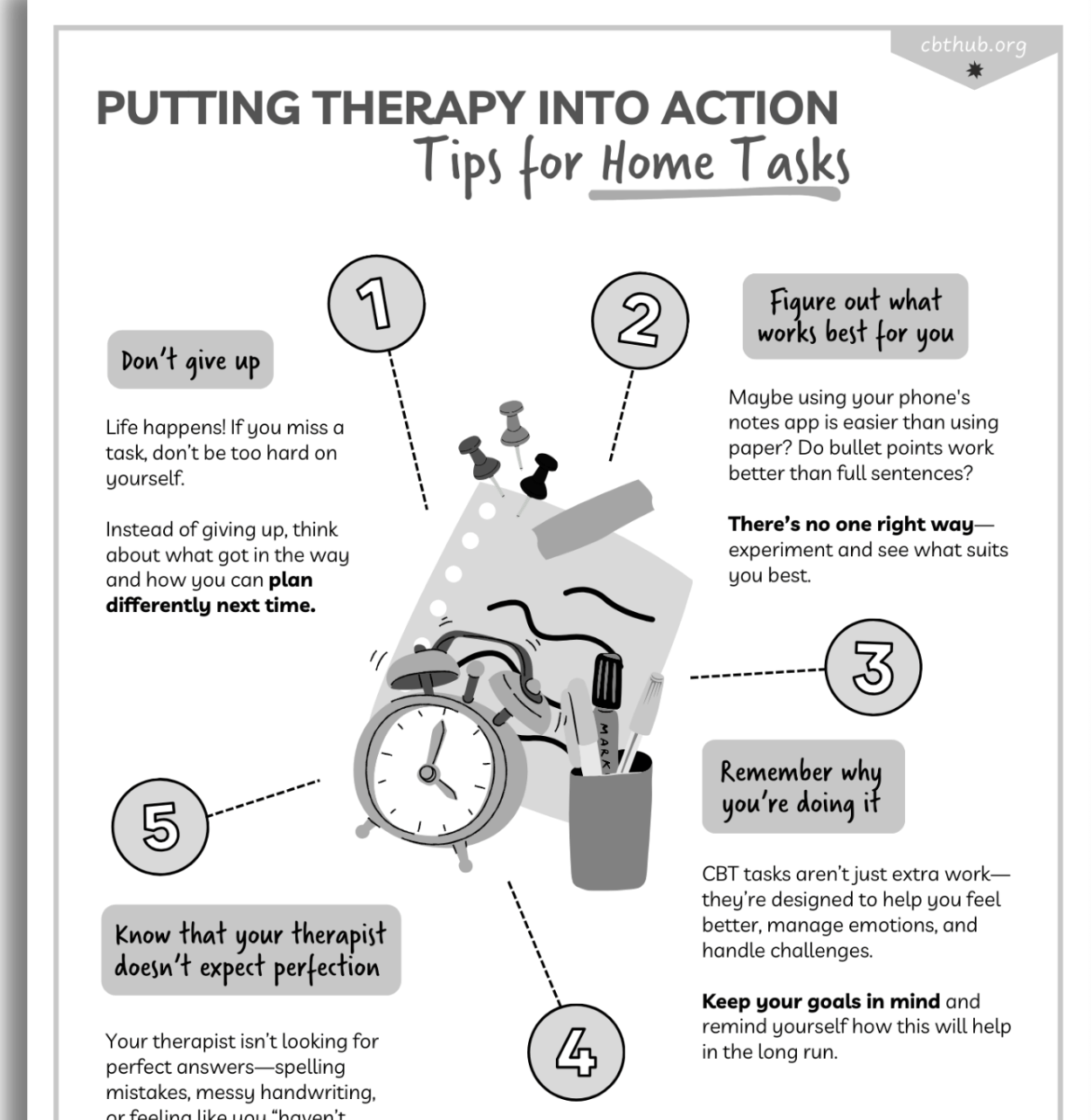
This resource provides practical guidance to help young people engage with therapy tasks outside of sessions. It outlines five key strategies to make home tasks more manageable, including adapting methods to suit individual preferences, linking tasks to existing habits, and recognising that perfection is not required.
Designed to support therapists in encouraging commitment to therapy activities, this resource offers a structured and reassuring approach, helping young people stay motivated and confident in their progress.

References and Further Reading
- Cammin-Nowak, S., Helbig-Lang, S., Lang, T., Gloster, A. T., Fehm, L., Gerlach, A. L., Ströhle, A., Deckert, J., Kircher, T., Hamm, A. O., Alpers, G. W., Arolt, V., & Wittchen, H.-U. (2013). Specificity of homework compliance effects on treatment outcome in CBT: Evidence from a controlled trial on panic disorder and agoraphobia. Journal of Clinical Psychology, 69(6), 616–629.
- LeBeau, R. T., Davies, C. D., Culver, N. C., & Craske, M. G. (2013). Homework compliance counts in cognitive-behavioral therapy. Cognitive Behaviour Therapy, 42(3), 171–179.
- Hughes, A. A., & Kendall, P. C. (2007). Prediction of cognitive behavior treatment outcome for children with anxiety disorders: Therapeutic relationship and homework compliance. Behavioural and Cognitive Psychotherapy, 35(4), 487–494.
- Gaynor, S. T., Lawrence, P. S., & Nelson-Gray, R. O. (2006). Measuring homework compliance in cognitive-behavioral therapy for adolescent depression: Review, preliminary findings, and implications for theory and practice. Behavior Modification, 30(5), 647–672.