


Fear & getting stuck
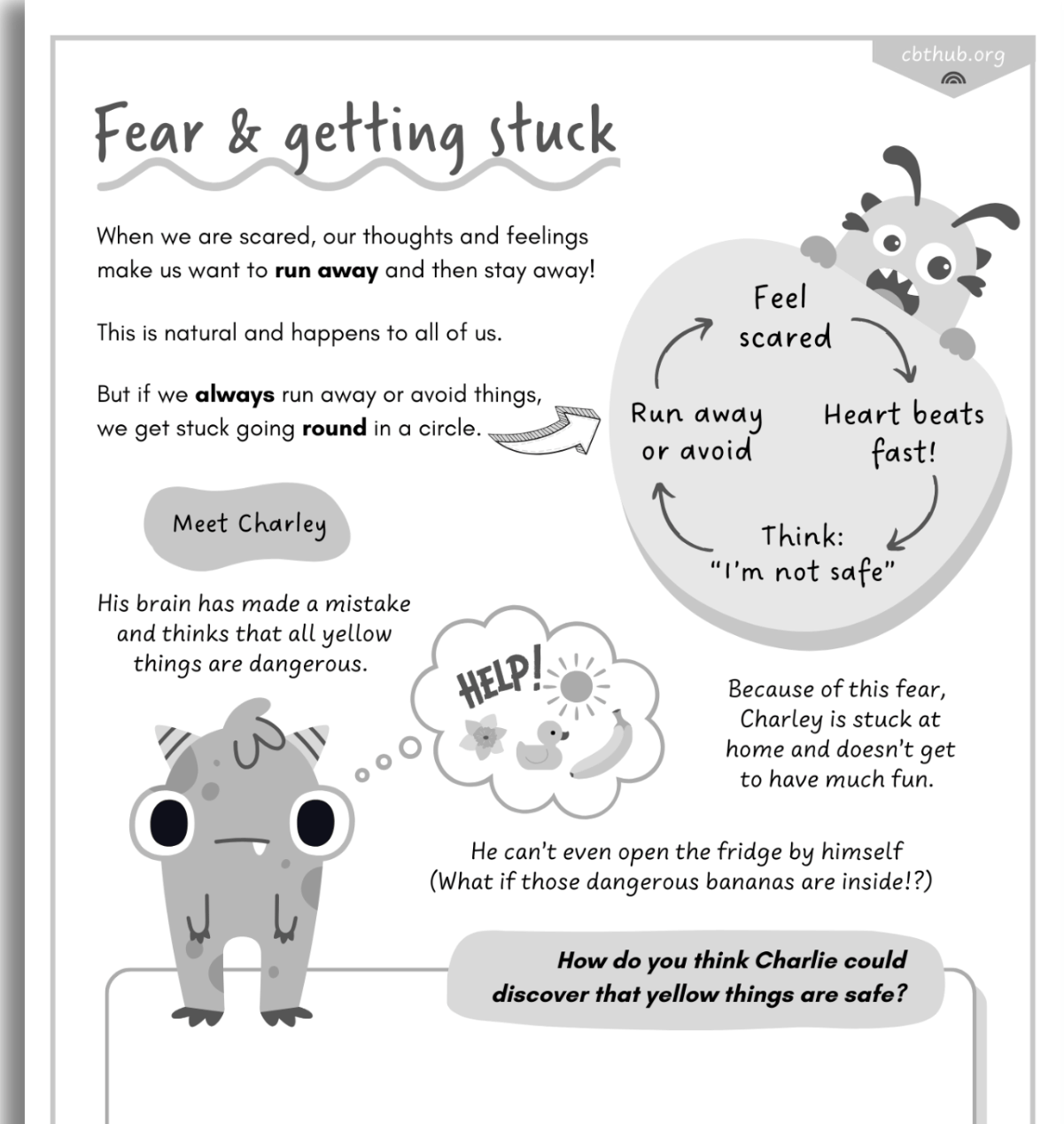
This resource offers a case illustration of phobia through the example of Charlie, a character who experiences an intense fear of the colour yellow.
It highlights the physiological responses to this fear, such as shaking hands and a racing heart, alongside the cognitive processes that accompany his anxiety. Designed to aid therapists in facilitating psychoeducation, this resource emphasises the protective role of fear while illustrating how avoidance behaviours can reinforce anxiety surrounding specific phobias like Charlie’s.

References and Further Reading
- May, A. C., Rudy, B. M., & Matson, J. L. (2013). Evidence-based behavioral treatment of dog phobia with young children: Two case examples. Behavior Modification, 37(1), 63–79. https://doi.org/10.1177/0145445512458524.
- Fraire, M. G., Halldorsdottir, T., & Ollendick, T. H. (2017). Evidence-based interventions for specific phobias in children and adolescents. Handbook of evidence-based interventions for children and adolescents, 267-278.
- Davis, T. E., Ollendick, T. H., & Öst, L.-G. (2019). One-session treatment of specific phobias in children: Recent developments and a systematic review. Annual Review of Clinical Psychology, 15, 233–256. https://doi.org/10.1146/annurev-clinpsy-050718-095608.
- Flatt, N., & King, N. (2008). Building the Case for Brief Psychointerventions in the Treatment of Specific Phobias in Children and Adolescents. Behaviour Change, 25(4), 191–200. doi:10.1375/bech.25.4.191.
- Foa, E. B., & Kozak, M. J. (1986). Emotional processing of fear: Exposure to corrective information. Psychological Bulletin, 99(1), 20–35. https://doi.org/10.1037/0033-2909.99.1.20.
- Tolin, D. F. (2012). Face your fears: A proven plan to beat anxiety, panic, phobias, and obsessions. John Wiley & Sons.