


Calm time: PMR
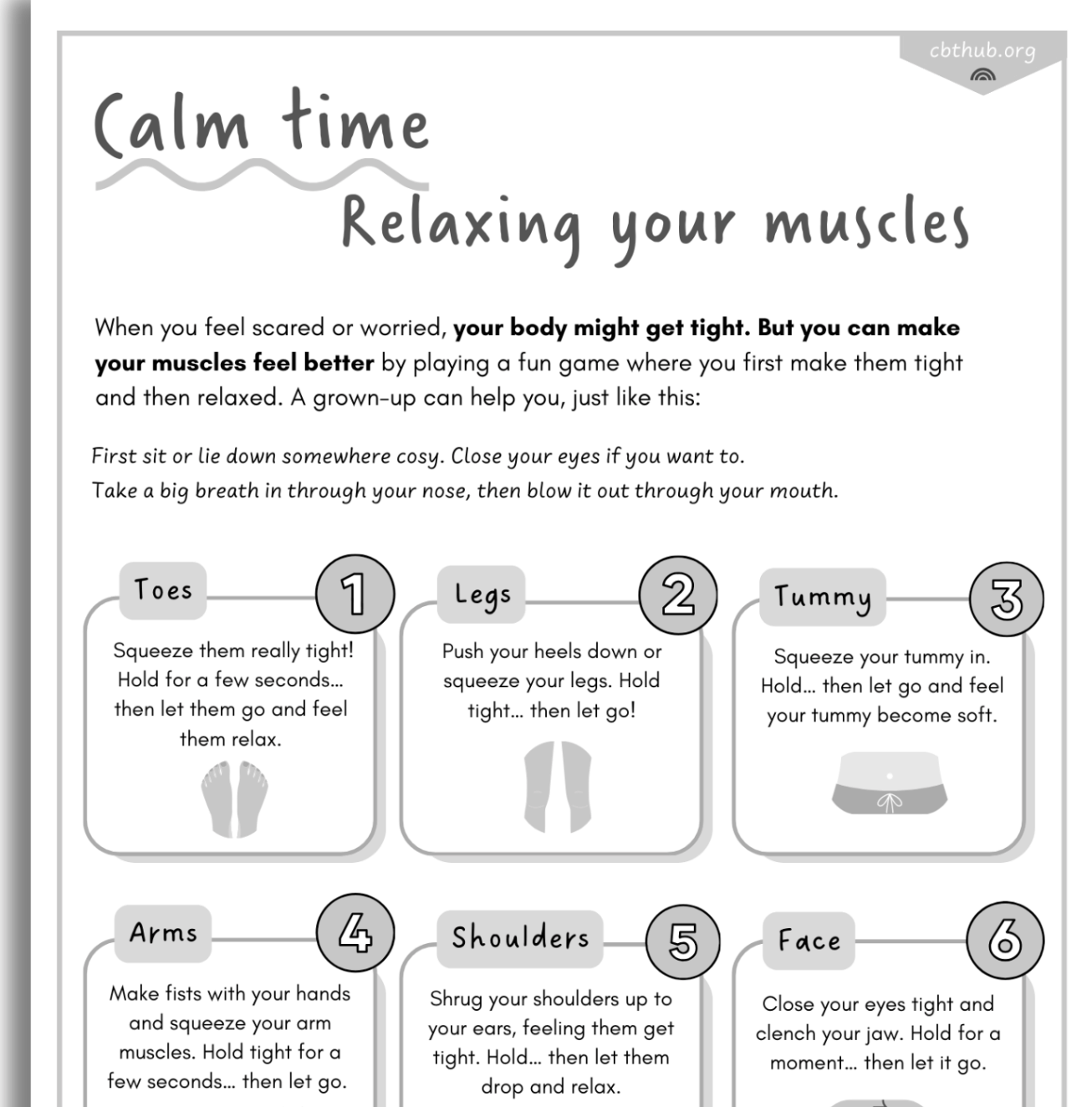
This worksheet introduces children to Progressive Muscle Relaxation (PMR). It explains how anxiety can lead to physical tightness and demonstrates how PMR helps by guiding them through tensing and relaxing different muscle groups.
PMR is widely used in treatment plans for anxiety disorders, insomnia, and chronic pain, and has shown positive outcomes in various clinical settings.
Free

Calm time: PMR
Free
Calm time: PMR
References and Further Reading
- Dugas, M. J., Brillon, P., Savard, P., Turcotte, J., Gaudet, A., Ladouceur, R., Leblanc, R., & Gervais, N. J. (2010). A randomized clinical trial of cognitive-behavioral therapy and applied relaxation for adults with generalized anxiety disorder. Behavior Therapy, 41(1), 46–58.
- Pompoli, A., Furukawa, T. A., Efthimiou, O., Imai, H., Tajika, A., & Salanti, G. (2018). Dismantling cognitive-behaviour therapy for panic disorder: A systematic review and component network meta-analysis. Psychological Medicine, 48(12), 1945–1953.
- Stevens, S. E., Hynan, M. T., Allen, M., Braun, M. M., & McCart, M. R. (2007). Are complex psychotherapies more effective than biofeedback, progressive muscle relaxation, or both? A meta-analysis. Psychological Reports, 100(1), 303–324.
- Laypath, C. (2011). A review of progressive muscle relaxation interventions used with school-aged children and adolescents. Utah State University.
- Conrad, A., & Roth, W. T. (2007). Muscle relaxation therapy for anxiety disorders: It works but how? Journal of Anxiety Disorders, 21(3), 243–264. https://doi.org/10.1016/j.janxdis.2006.08.001.