


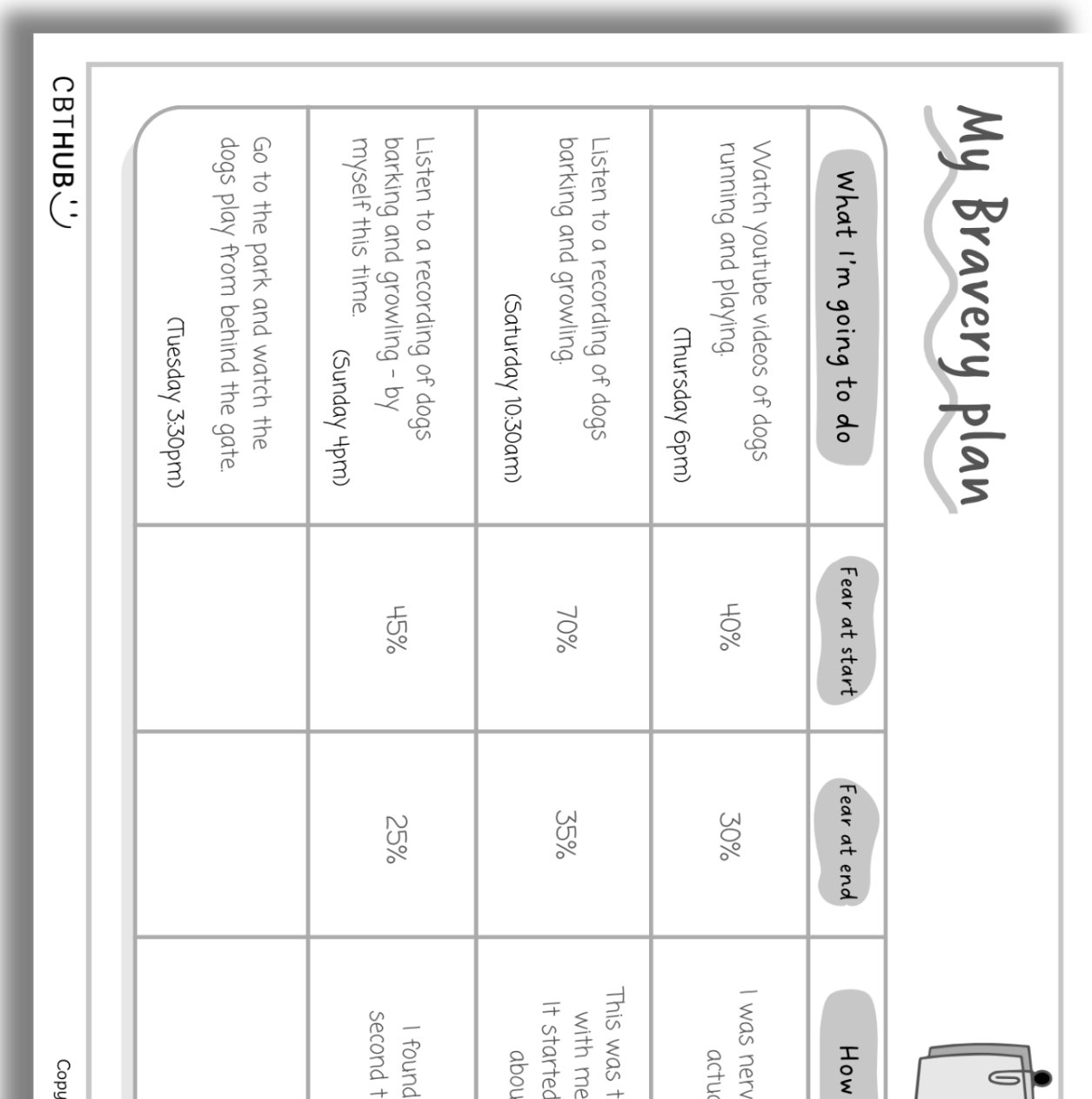
My bravery plan (example)
This graded exposure log is designed to support children to plan and reflect on their exposure exercises.
Though examples, children and their caregivers are shown how to plan an exposure task, rate their level of fear at the start and end of the activity, and to record how the task went. This data can then be used in therapy sessions to help review progress and plan next steps.

References and Further Reading
- May, A. C., Rudy, B. M., & Matson, J. L. (2013). Evidence-based behavioral treatment of dog phobia with young children: Two case examples. Behavior Modification, 37(1), 63–79. https://doi.org/10.1177/0145445512458524.
- Fraire, M. G., Halldorsdottir, T., & Ollendick, T. H. (2017). Evidence-based interventions for specific phobias in children and adolescents. Handbook of evidence-based interventions for children and adolescents, 267-278.
- Davis, T. E., Ollendick, T. H., & Öst, L.-G. (2019). One-session treatment of specific phobias in children: Recent developments and a systematic review. Annual Review of Clinical Psychology, 15, 233–256. https://doi.org/10.1146/annurev-clinpsy-050718-095608.
- Flatt, N., & King, N. (2008). Building the Case for Brief Psychointerventions in the Treatment of Specific Phobias in Children and Adolescents. Behaviour Change, 25(4), 191–200. doi:10.1375/bech.25.4.191.
- Foa, E. B., & Kozak, M. J. (1986). Emotional processing of fear: Exposure to corrective information. Psychological Bulletin, 99(1), 20–35. https://doi.org/10.1037/0033-2909.99.1.20.
- Tolin, D. F. (2012). Face your fears: A proven plan to beat anxiety, panic, phobias, and obsessions. John Wiley & Sons.