


How CBT can help OCD
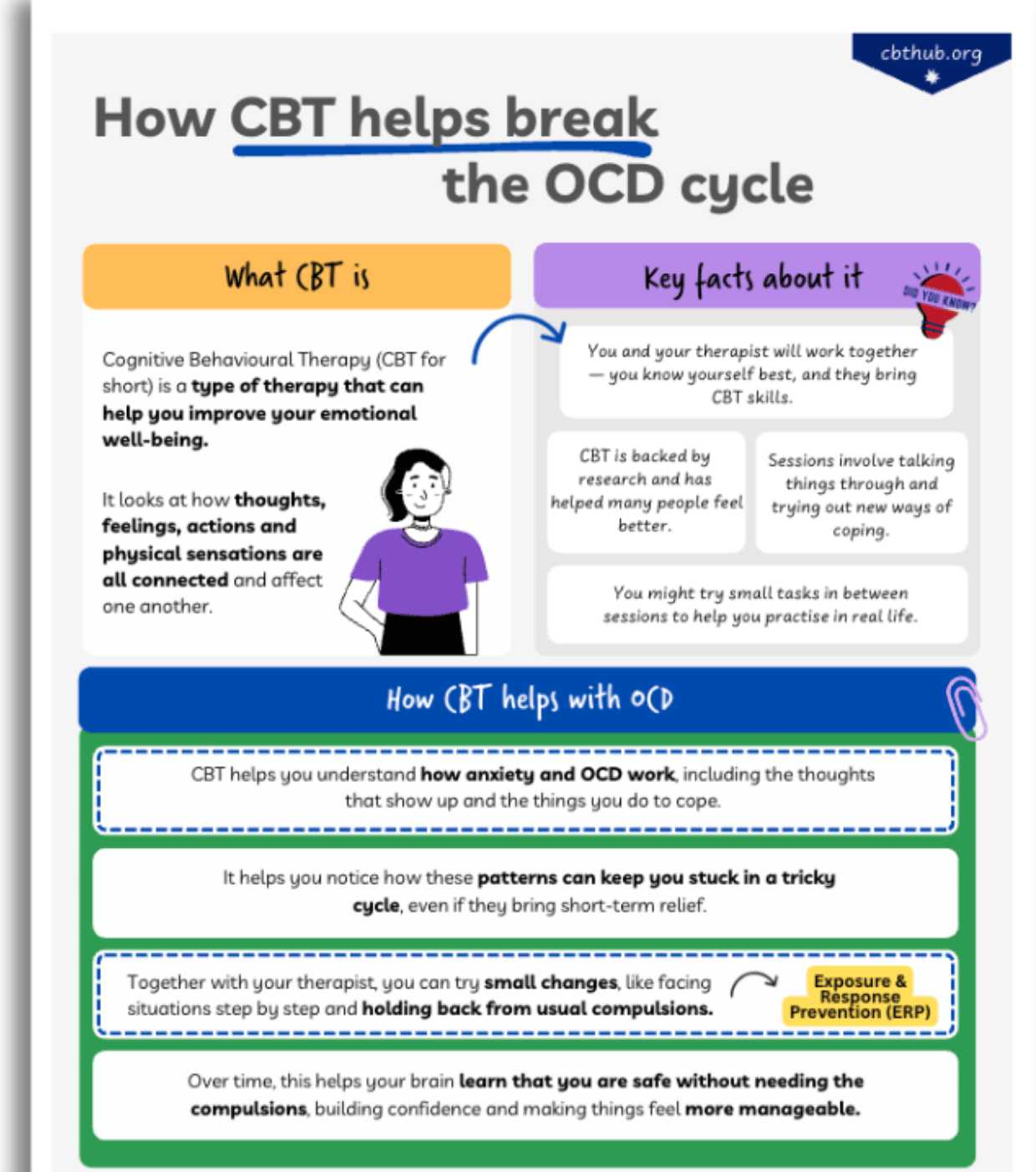
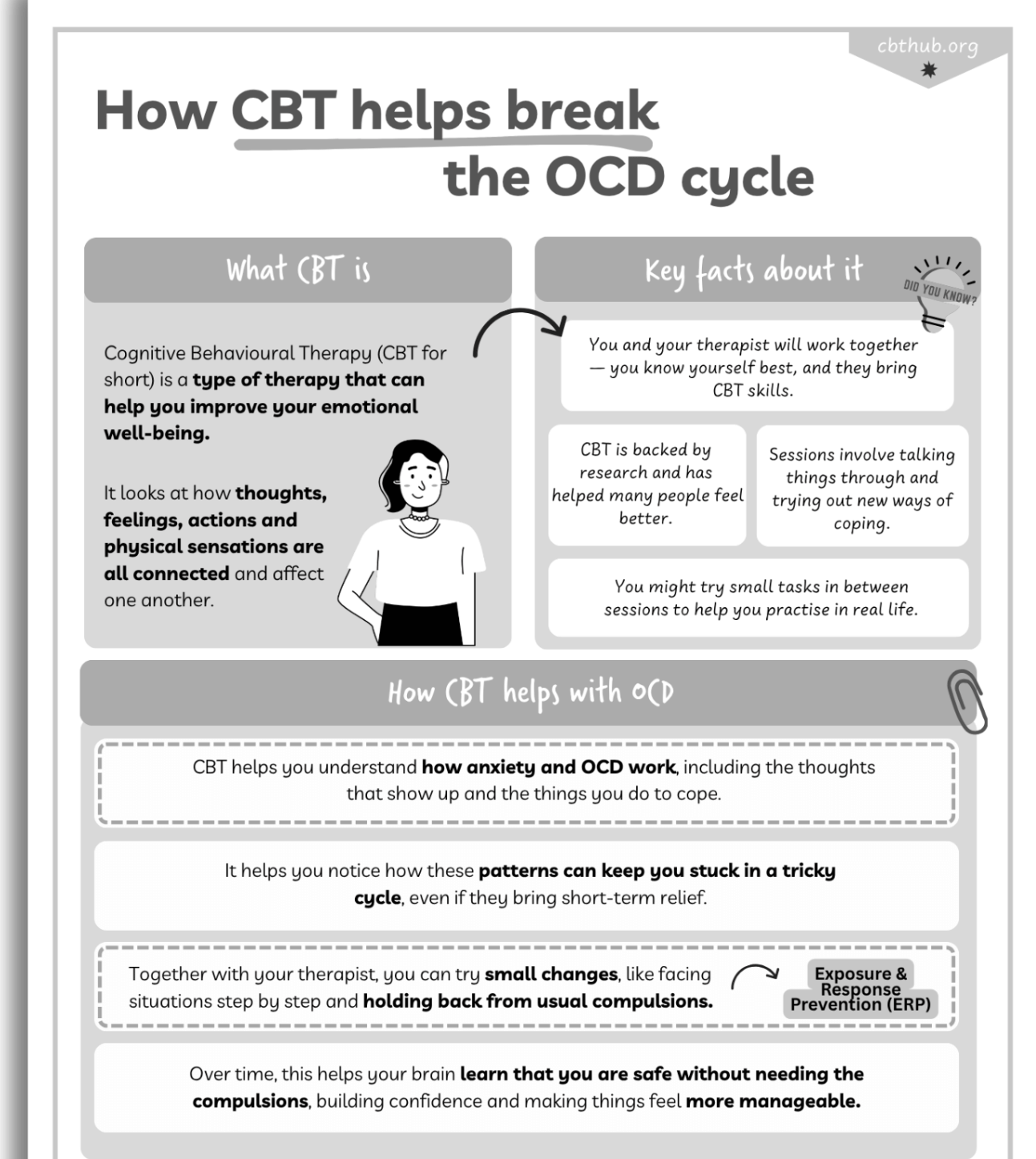
How CBT Can Help OCD is a psychoeducation handout explaining what cognitive behavioural therapy is and how it can support young people experiencing obsessive-compulsive disorder.
The resource introduces the connections between thoughts, feelings, actions and physical sensations, before explaining how CBT can help a young person understand their anxiety and OCD patterns. It also introduces the concept of exposure and response prevention (ERP), alongside collaboration, between-session practice and learning new ways of responding to obsessions and compulsions.
References and Further Reading
- Caron, A., & Robin, J. (2010). Engagement of adolescents in cognitive–behavioral therapy for obsessive–compulsive disorder. PsycNET.
- Derisley, J., Heyman, I., Robinson, S., & Turner, C. (2008). Breaking free from OCD: A CBT guide for young people and their families. Jessica Kingsley Publishers.
- Franklin, M. E., Freeman, J. B., & March, J. S. (2018). Treating OCD in children and adolescents: A cognitive-behavioral approach. Guilford Press.
- Kaiser, B., & Bouvard, M. (2009). Obsessive-compulsive disorder in children and adolescents: Efficacy of combined treatment. Clinical Neuropsychiatry.
- Kircanski, K., Peris, T. S., & Piacentini, J. C. (2011). Cognitive-behavioral therapy for obsessive-compulsive disorder in children and adolescents. Journal of Child and Adolescent Psychiatric Clinics of North America, 20(2), 239–254.
- Krebs, G., Volz, C., & Turner, C. (2018). OCD: Tools to help you fight back!. Jessica Kingsley Publishers.
- Riggin, B. M., & Lack, C. W. (2016). Cognitive-behavioral therapy for youth with obsessive-compulsive and related disorders. Current Psychiatry Reviews.
- Van Noppen, B., Sassano-Higgins, S., Appasani, R., et al. (2021). Cognitive-behavioral therapy for obsessive-compulsive disorder: 2021 update. Focus, 19(4).
- Wagner, A. P. (2003). Cognitive-behavioral therapy for children and adolescents with obsessive-compulsive disorder. Brief Treatment and Crisis Intervention.