


Understanding Obsessions & Compulsions
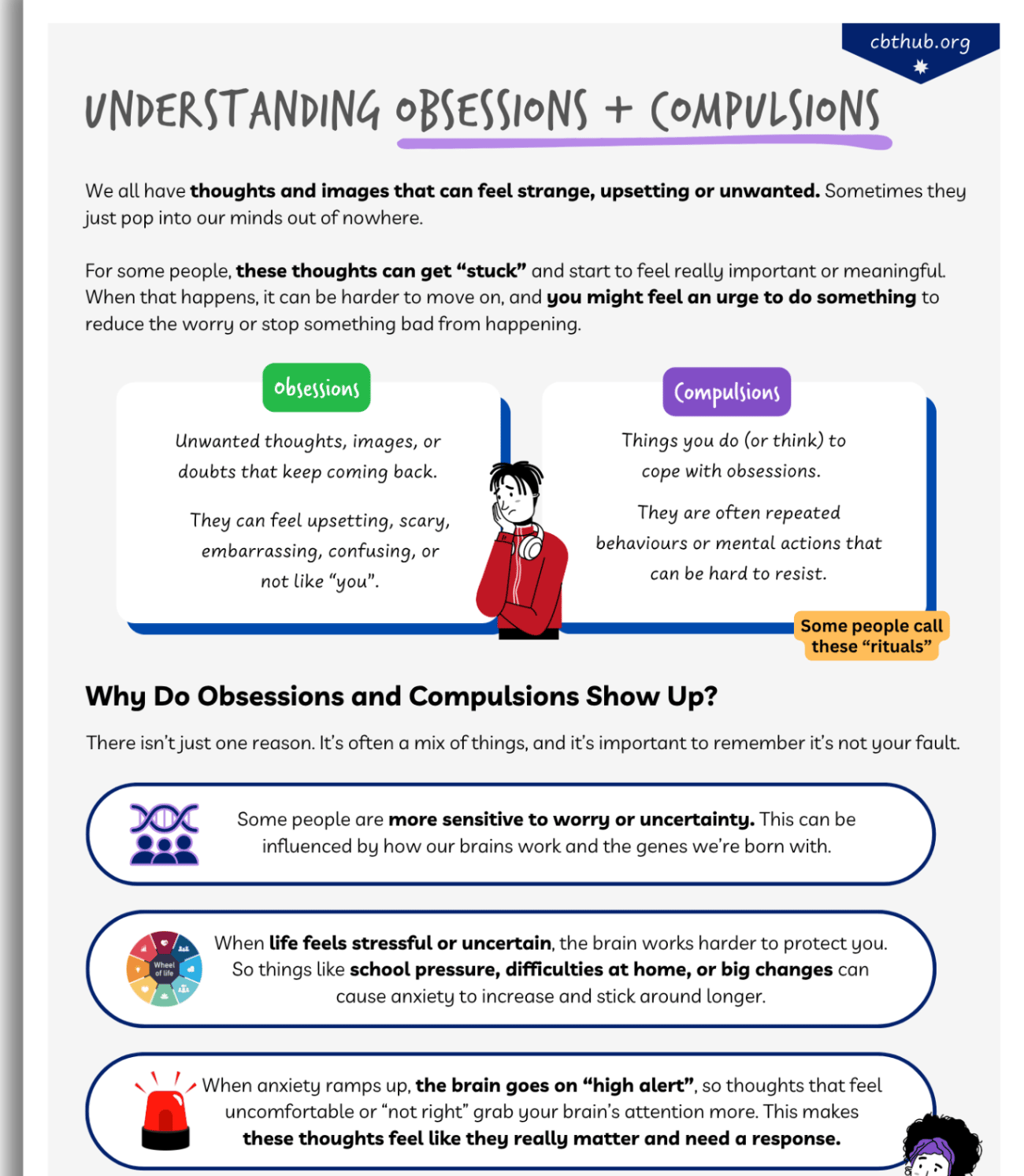
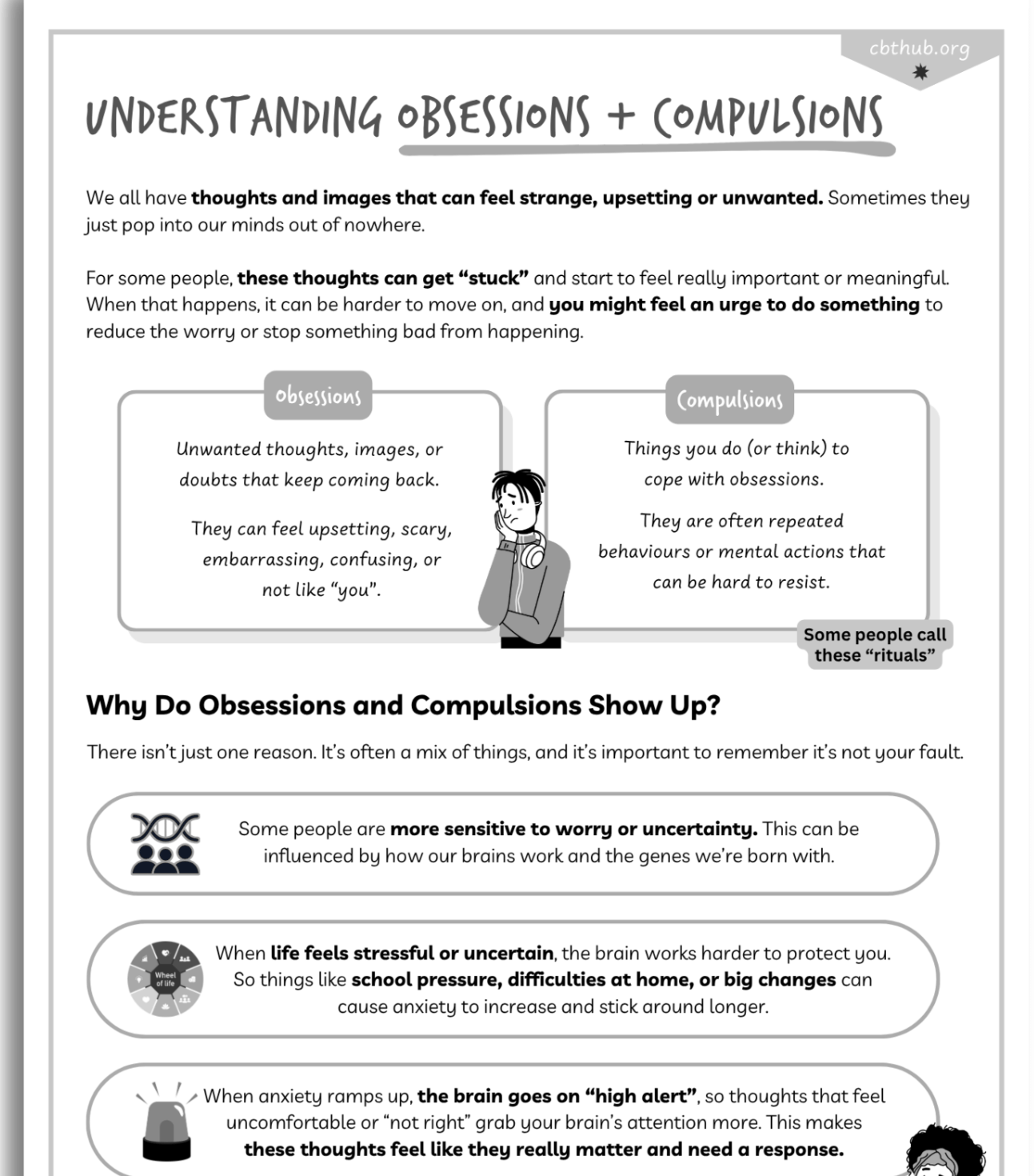
Understanding Obsessions and Compulsions is an OCD psychoeducation resource that explains the difference between obsessions and compulsions. It introduces intrusive thoughts, images, urges and doubts, alongside the behavioural or mental compulsions a young person may feel driven to perform.
Therapists can use it to introduce key OCD concepts, help young people recognise these experiences in their own lives and develop a shared language for discussing them. The resource also supports the normalisation of intrusive experiences and can help reduce feelings of shame, confusion or self-blame.
References and Further Reading
- Caron, A., & Robin, J. (2010). Engagement of adolescents in cognitive–behavioral therapy for obsessive–compulsive disorder. PsycNET.
- Derisley, J., Heyman, I., Robinson, S., & Turner, C. (2008). Breaking free from OCD: A CBT guide for young people and their families. Jessica Kingsley Publishers.
- Franklin, M. E., Freeman, J. B., & March, J. S. (2018). Treating OCD in children and adolescents: A cognitive-behavioral approach. Guilford Press.
- Kaiser, B., & Bouvard, M. (2009). Obsessive-compulsive disorder in children and adolescents: Efficacy of combined treatment. Clinical Neuropsychiatry.
- Kircanski, K., Peris, T. S., & Piacentini, J. C. (2011). Cognitive-behavioral therapy for obsessive-compulsive disorder in children and adolescents. Journal of Child and Adolescent Psychiatric Clinics of North America, 20(2), 239–254.
- Krebs, G., Volz, C., & Turner, C. (2018). OCD: Tools to help you fight back!. Jessica Kingsley Publishers.
- Riggin, B. M., & Lack, C. W. (2016). Cognitive-behavioral therapy for youth with obsessive-compulsive and related disorders. Current Psychiatry Reviews.
- Van Noppen, B., Sassano-Higgins, S., Appasani, R., et al. (2021). Cognitive-behavioral therapy for obsessive-compulsive disorder: 2021 update. Focus, 19(4).
- Wagner, A. P. (2003). Cognitive-behavioral therapy for children and adolescents with obsessive-compulsive disorder. Brief Treatment and Crisis Intervention.