


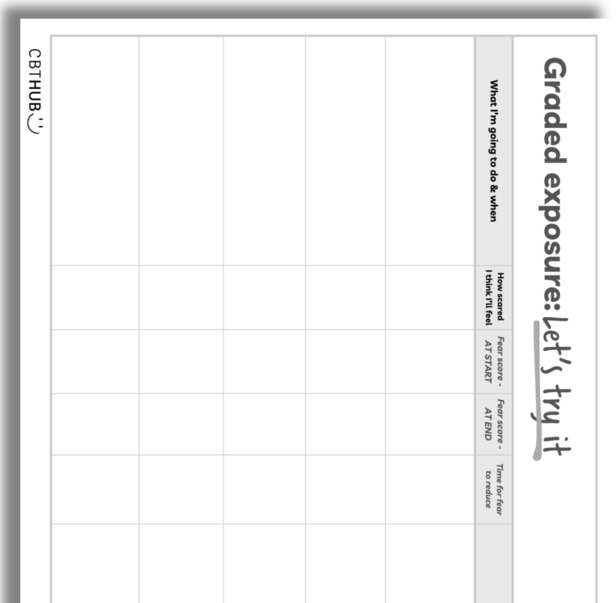
Graded Exposure Record (Blank Template)
This tool is designed for young people to document their own exposure exercises and includes sections for documenting the specific fear-inducing situation, the anticipated level of fear, and the actual experience of anxiety before and after exposure.
It can be used by young people to track their between session exposure activities, and can also be used in session to guide discussions around progress.

References and Further Reading
- Craske, M. (2015). Optimizing exposure therapy for anxiety disorders: an inhibitory learning and inhibitory regulation approach. Verhaltenstherapie, 25, 134-143. DOI: 10.1159/000381574.
- Foa, E. B., & Kozak, M. J. (1986). Emotional processing of fear: Exposure to corrective information. Psychological Bulletin, 99, 20–35, https://doi.org/10.1037/0033-2909.99.1.20.
- Tolin, D. F. (2012). Face Your fears: A Proven Plan to Beat Anxiety, Panic, Phobias, and Obsessions. John Wiley and Sons.
- Flatt, N., & King, N. (2008). Building the Case for Brief Psychointerventions in the Treatment of Specific Phobias in Children and Adolescents. Behaviour Change, 25(4), 191–200. doi:10.1375/bech.25.4.191.
- Davis, T. E., III, May, A., & Whiting, S. E. (2011). Evidence-based treatment of anxiety and phobia in children and adolescents: Current status and effects on the emotional response. Clinical Psychology Review, 31(4), 592-602. https://doi.org/10.1016/j.cpr.2011.01.001.