


Social Anxiety Formulation (Example – Archived)
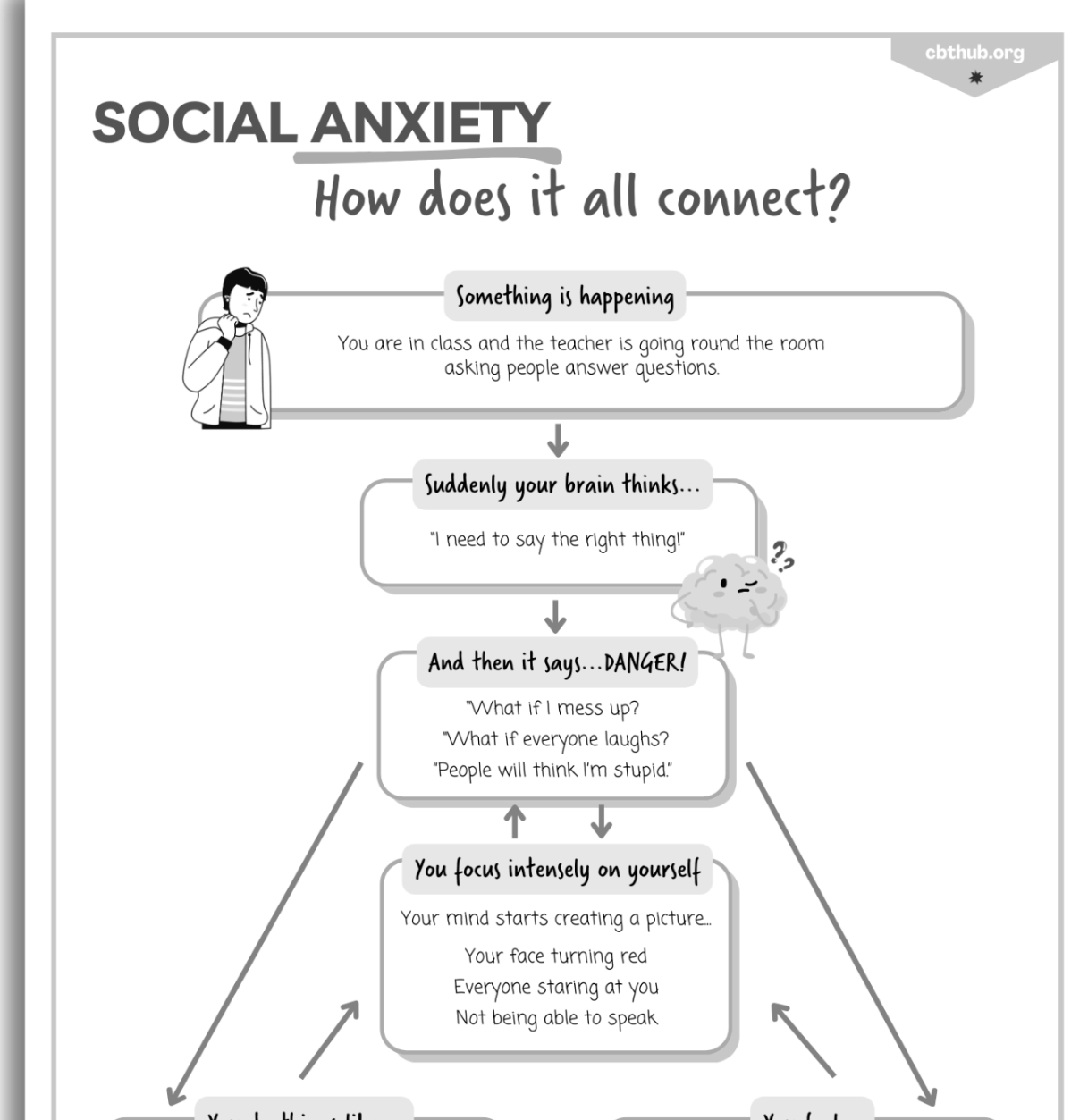
This resource presents a simplified, adolescent-friendly version of the Clark and Wells (1995) model of social anxiety, already filled in with a relatable example to support understanding and facilitate discussion.
It is designed to support therapists in helping young people understand how social anxiety is maintained — highlighting key maintaining processes such as negative self-appraisal, self-focused attention, safety behaviours, and misinterpretation of physiological symptoms.

References & Further Reading
- Clark, D. M., & Wells, A. (1995). A cognitive model of social phobia. In R. G. Heimberg, M. R. Liebowitz, D. A. Hope, & F. R. Schneier (Eds.), Social phobia: Diagnosis, assessment, and treatment (p. 69–93). The Guilford Press.
- Alves F, Figueiredo DV, Vagos P. (2022) The Prevalence of Adolescent Social Fears and Social Anxiety Disorder in School Contexts. Int J Environ Res Public Health.
- Connor, K.M., Davidson, J.R., Churchill, L.E., Sherwood, A., Weisler, R.H. and Foa, E., 2000. Psychometric properties of the Social Phobia Inventory (SPIN): New self-rating scale. The British Journal of Psychiatry, 176(4), pp.379-386.
- Hofmann SG. Cognitive factors that maintain social anxiety disorder: a comprehensive model and its treatment implications. Cogn Behav Ther. 2007;36(4):193-209. doi: 10.1080/16506070701421313.
- Kashdan, T.B. and Herbert, J.D., 2001. Social anxiety disorder in childhood and adolescence: Current status and future directions. Clinical child and family psychology review, 4, pp.37-61