


Managing therapy endings: tips for therapists
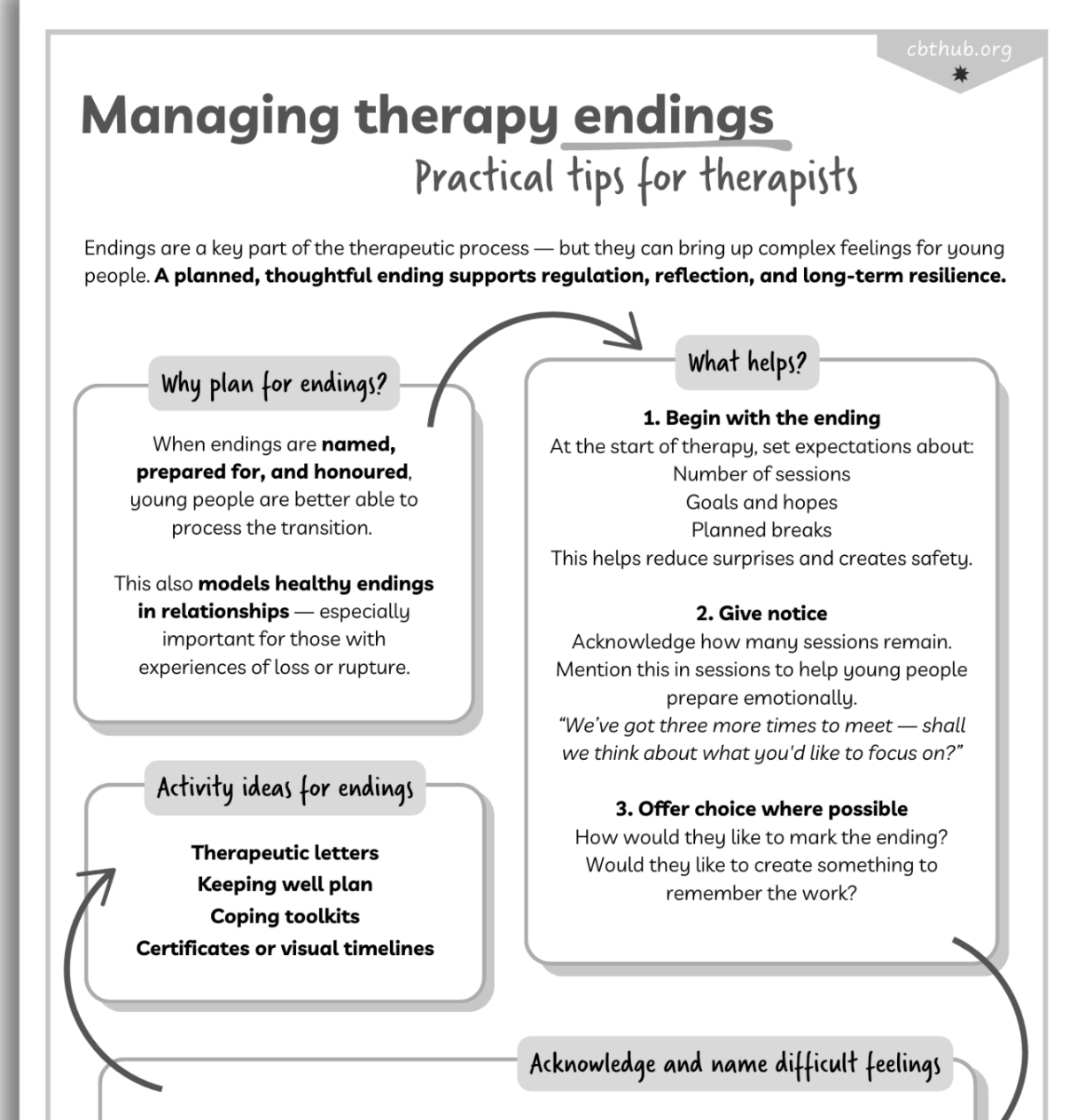
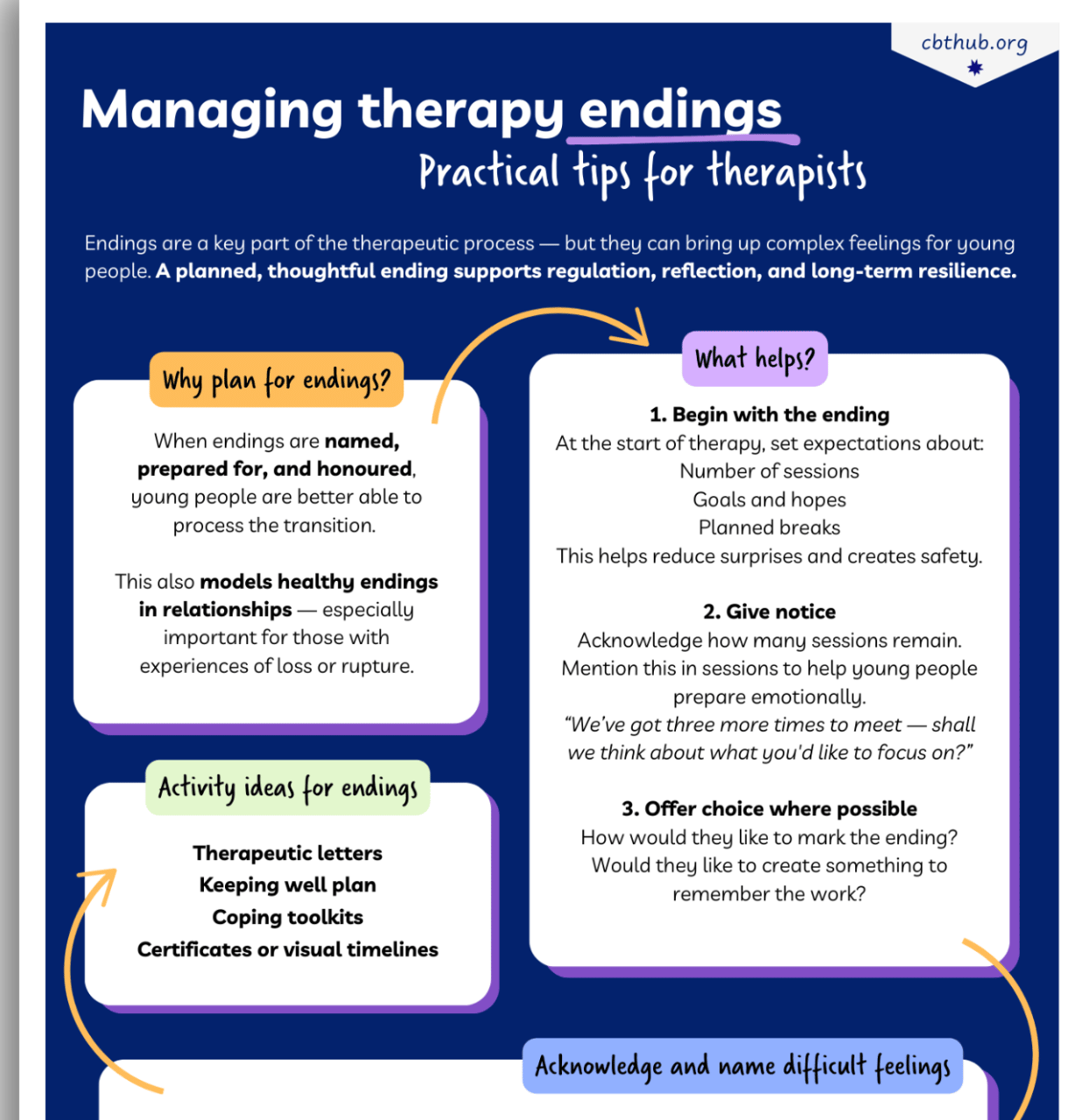
This resource provides a clear, structured guide to planning and supporting thoughtful therapy endings. It covers key principles like setting expectations early, naming emotions, and using creative tools to help mark the transition.
Designed to help therapists guide children and young people through endings that encourage reflection, emotional regulation, and long-term resilience.
References and Further Reading
- Vidair, H. B., Feyijinmi, G. O., & Feindler, E. L. (2017). Termination in cognitive–behavioral therapy with children, adolescents, and parents. Psychotherapy, 54(1), 15–21. https://doi.org/10.1037/pst0000086
- Roth, A. D., & Pilling, S. (2007). The competences required to deliver effective cognitive and behavioural therapy for people with depression and with anxiety disorders. University College London.
- Bennett-Levy, J., Richards, D. A., Farrand, P., Christensen, H., Griffiths, K., Kavanagh, D. J., Proudfoot, J., White, J., & Williams, C. (Eds.) (2010). Oxford guide to low intensity CBT interventions. Oxford University Press.
- Miller, H. (2022). The CWP and EMHP handbook: CBT essentials with children and young people. Jessica Kingsley Publishers.