



This post reflects on evidence and commentary from the UK Covid-19 Public Inquiry, the Economics Observatory, and the Children’s Commissioner for England, exploring what they collectively suggest about the longer-term impact of the pandemic on children and young people’s wellbeing.
Why this still matters for therapists
Most therapists working with children and young people have a working sense that the pandemic had a significant impact. Disrupted routines. Lost schooling. Increased anxiety. Social isolation.
But in practice, this knowledge can feel vague — more like a shared backdrop than something we can clearly articulate or integrate into formulation. As time moves on, the pandemic risks becoming a general explanation that is either over-invoked or quietly sidelined.
So what do research and national inquiries actually tell us about the lasting effects of the pandemic on children and young people’s wellbeing? And how might that help therapists move from a diffuse sense of impact to a more grounded, contextual understanding?
What young people themselves have said
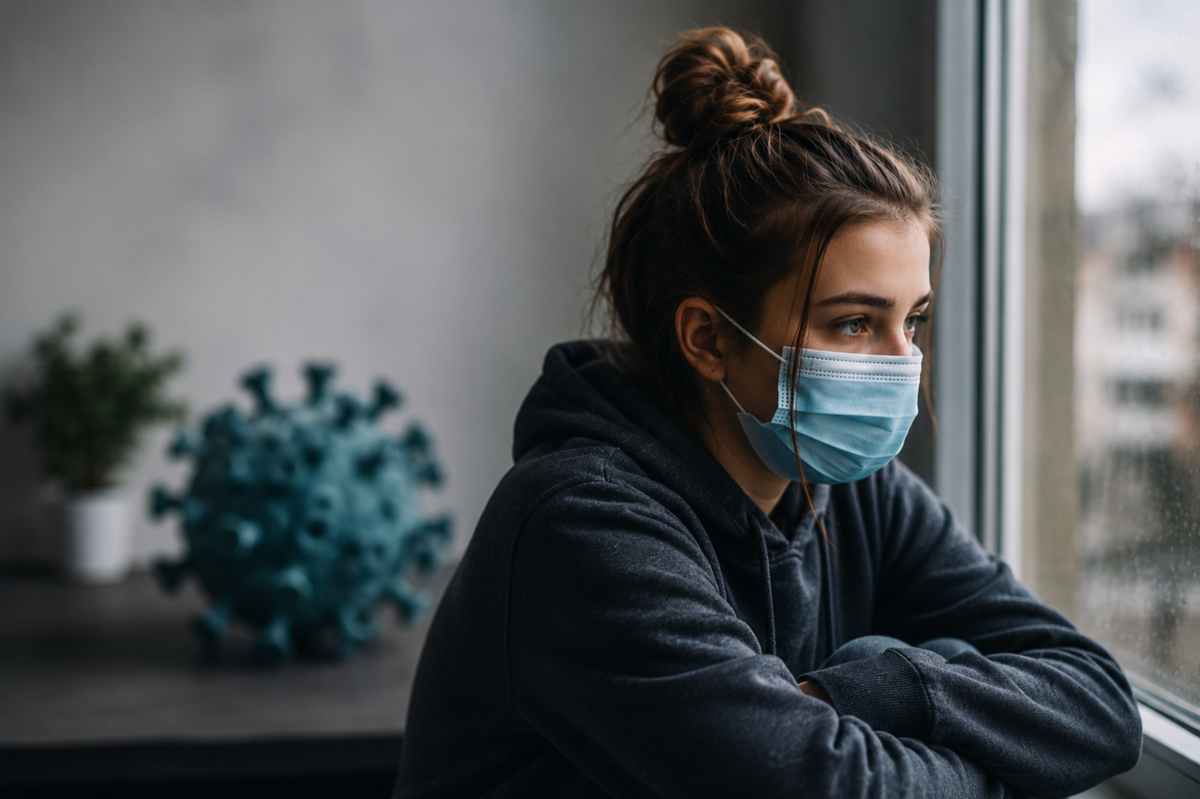
As part of the UK Covid-19 Public Inquiry, over 600 children and young people aged 9–22 shared accounts of their experiences of the pandemic. Their testimonies describe lives that changed “so quickly”, with repeated themes emerging across age groups.
Young people spoke about:
- Sudden loss of routine, structure, and predictability
- Disrupted education and uncertainty about the future
- Missed developmental milestones and social experiences
- Increased responsibilities within families
- Feelings of loneliness, anxiety, and disconnection
What stands out is not just distress, but disruption to developmental pathways — schooling, friendships, independence, and identity formation. For many, these losses were not temporary inconveniences, but experiences that shaped how safe, predictable, or controllable the world felt during formative years.
What population-level data suggests
Analysis discussed by the Economics Observatory draws on large-scale longitudinal data to examine how young people’s wellbeing has changed since the pandemic.
The picture that emerges is not one of uniform or ongoing decline, but of uneven recovery:
- Some aspects of wellbeing improved as restrictions eased.
- Other difficulties — particularly emotional distress — persisted for specific groups.
- Girls and gender-diverse young people appear to have experienced greater and more sustained impacts.
- Pre-existing inequalities were often amplified rather than resolved.
This helps refine the narrative. The pandemic did not affect all young people in the same way, nor did its effects simply “end” when lockdowns did. Instead, it interacted with age, gender, context, and existing vulnerability — leaving some young people carrying forward a heavier emotional load.
What policy reflection highlights
The Children’s Commissioner’s reflections focus less on describing impact and more on the legacy left behind. The emphasis is on what children and young people need now — not because they are still “in” the pandemic, but because its effects are embedded in educational, social, and emotional trajectories.
Key themes include:
- The importance of recognising cumulative loss and disruption
- The need to rebuild trust, safety, and opportunity
- A warning against assuming that time alone will resolve these impacts
From a therapeutic perspective, this reinforces an important point: the absence of restrictions does not mean the absence of impact.
What this adds to therapeutic thinking
Taken together, these sources move us beyond a general sense that “Covid was hard” and towards a more specific understanding of how and why it may still matter in the therapy room.
They suggest that for some young people:
- A sense of uncertainty or lack of safety may be rooted in prolonged disruption
- Social confidence may have been shaped by extended periods of isolation
- Educational stress may carry added emotional weight due to interrupted foundations
- Identity development may have unfolded under conditions of loss, constraint, or heightened responsibility
Importantly, these patterns may not present as explicit “pandemic distress”. Instead, they may show up indirectly — in anxiety about transitions, difficulty trusting stability, low confidence in social or academic settings, or a sense of being “behind”.
A context that still shapes how young people make sense of the world
For many therapists, the pandemic sits somewhere between “obvious” and “hard to pin down”. It’s widely acknowledged, yet often left unexplored — partly because its effects don’t always show up as clear, discrete problems.
What these sources offer is a way of sharpening that context. They suggest that for some children and young people, the pandemic was not just a difficult period, but a prolonged disruption that shaped expectations about stability, relationships, progress, and the future. These expectations may continue to influence how young people respond to uncertainty, change, and pressure — even when the pandemic itself is no longer named.
Rather than asking whether the pandemic is still affecting young people, it may be more useful to consider how it has been woven into their developmental stories: what was interrupted, what was lost, what adapted, and what never quite resumed. Held this way, the pandemic becomes less of a background explanation and more of a shared context — one that can quietly inform formulation, pacing, and understanding in therapeutic work.