


Climbing a panic ladder
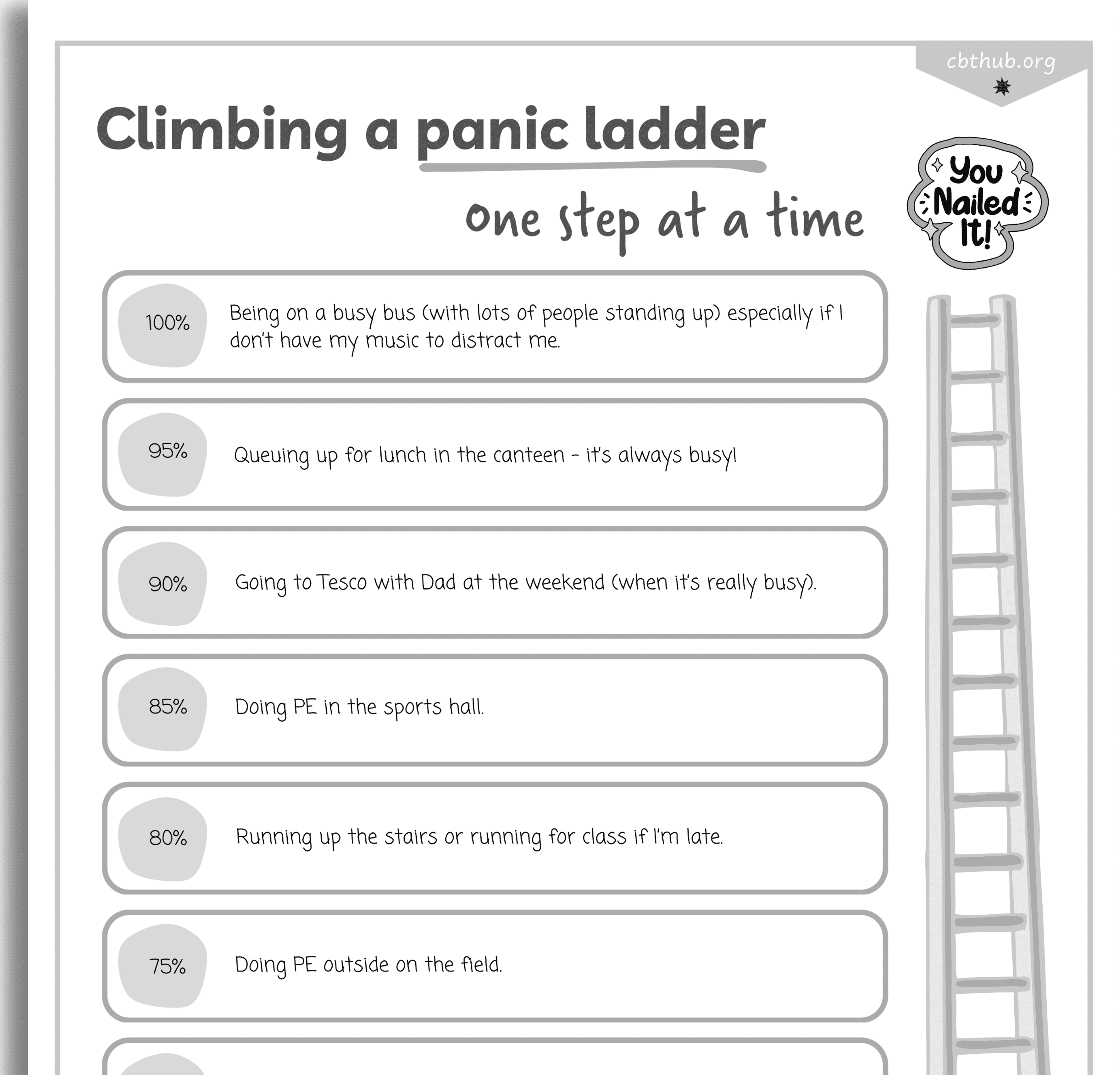
This resource introduces the concept of a ‘panic ladder’—a graded hierarchy that helps young people gradually confront situations that provoke panic, progressing from more manageable scenarios to highly challenging ones.
This version provides an example ladder filled in by Shaan, who is a young person struggling with panic in crowded places.

References and Further Reading
- Pincus, D. B., Ehrenreich-May, J., Whitton, S. W., Mattis, S. G., & Barlow, D. H. (2010). Cognitive-behavioral treatment of panic disorder in adolescence. Journal of Clinical Child & Adolescent Psychology, 39(5), 638–649. https://doi.org/10.1080/15374416.2010.501288.
- Peterman, J. S., Carper, M. M., & Kendall, P. C. (2016). Testing the Habituation-Based Model of Exposures for Child and Adolescent Anxiety. Journal of Clinical Child and Adolescent Psychology, pp. 1–11. https://doi.org/10.1080/15374416.2016.1163707.
- Waite, P. (2022). Protocol for a randomised controlled feasibility study examining the efficacy of brief cognitive therapy for the treatment of panic disorder in adolescents (PANDA). Pilot and Feasibility Studies, 8(1). https://doi.org/10.1186/s40814-022-01009-z.
- Hoffman , E. C. , & Mattis , S. G. ( 2000 ). A developmental adaptation of panic control treatment for panic disorder in adolescence . Cognitive and Behavioral Practice, 7 , 253 – 261.
- Micco , J. A. , Choate-Summers , M. L. , Ehrenreich , J. T. , Pincus , D. B. , & Mattis , S. G. ( 2007 ). Identifying efficacious treatment components of Panic Control Treatment for Adolescents: A preliminary investigation . Child & Family Behavior Therapy , 29 ( 4 ), 1 – 23.