


Understanding the Panic Trap
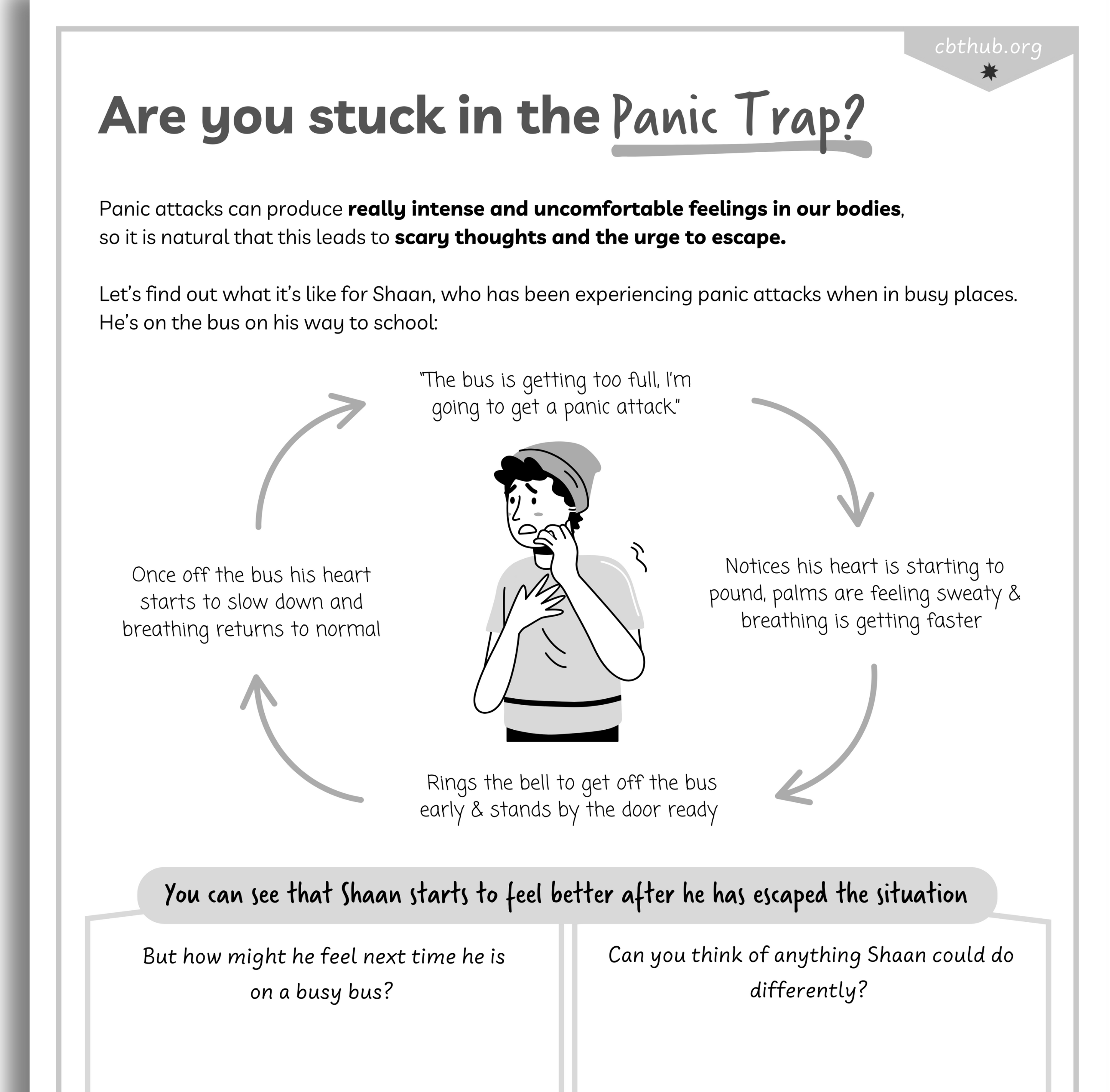
This resource offers a case illustration of panic attacks through the example of Shaan, a young person experiencing anxiety in crowded environments.
It highlights the physiological responses to panic alongside the cognitive processes. It’s designed to aid therapists in facilitating psychoeducation around the maintenance cycle, emphasising how avoidance reinforces anxiety.

References and Further Reading
- Pincus, D. B., Ehrenreich-May, J., Whitton, S. W., Mattis, S. G., & Barlow, D. H. (2010). Cognitive-behavioral treatment of panic disorder in adolescence. Journal of Clinical Child & Adolescent Psychology, 39(5), 638–649 https://doi.org/10.1080/15374416.2010.501288.
- Peterman, J. S., Carper, M. M., & Kendall, P. C. (2016). Testing the Habituation-Based Model of Exposures for Child and Adolescent Anxiety. Journal of Clinical Child and Adolescent Psychology, pp. 1–11 https://doi.org/10.1080/15374416.2016.1163707.
- Waite, P. (2022). Protocol for a randomised controlled feasibility study examining the efficacy of brief cognitive therapy for the treatment of panic disorder in adolescents (PANDA). Pilot and Feasibility Studies, 8(1) https://doi.org/10.1186/s40814-022-01009-z.
- Hoffman , E. C. , & Mattis , S. G. ( 2000 ). A developmental adaptation of panic control treatment for panic disorder in adolescence . Cognitive and Behavioral Practice, 7 , 253 – 261.
- Micco , J. A. , Choate-Summers , M. L. , Ehrenreich , J. T. , Pincus , D. B. , & Mattis , S. G. ( 2007 ). Identifying efficacious treatment components of Panic Control Treatment for Adolescents: A preliminary investigation . Child & Family Behavior Therapy , 29 ( 4 ), 1 – 23.