


Repeated Exposure and Anxiety Reduction
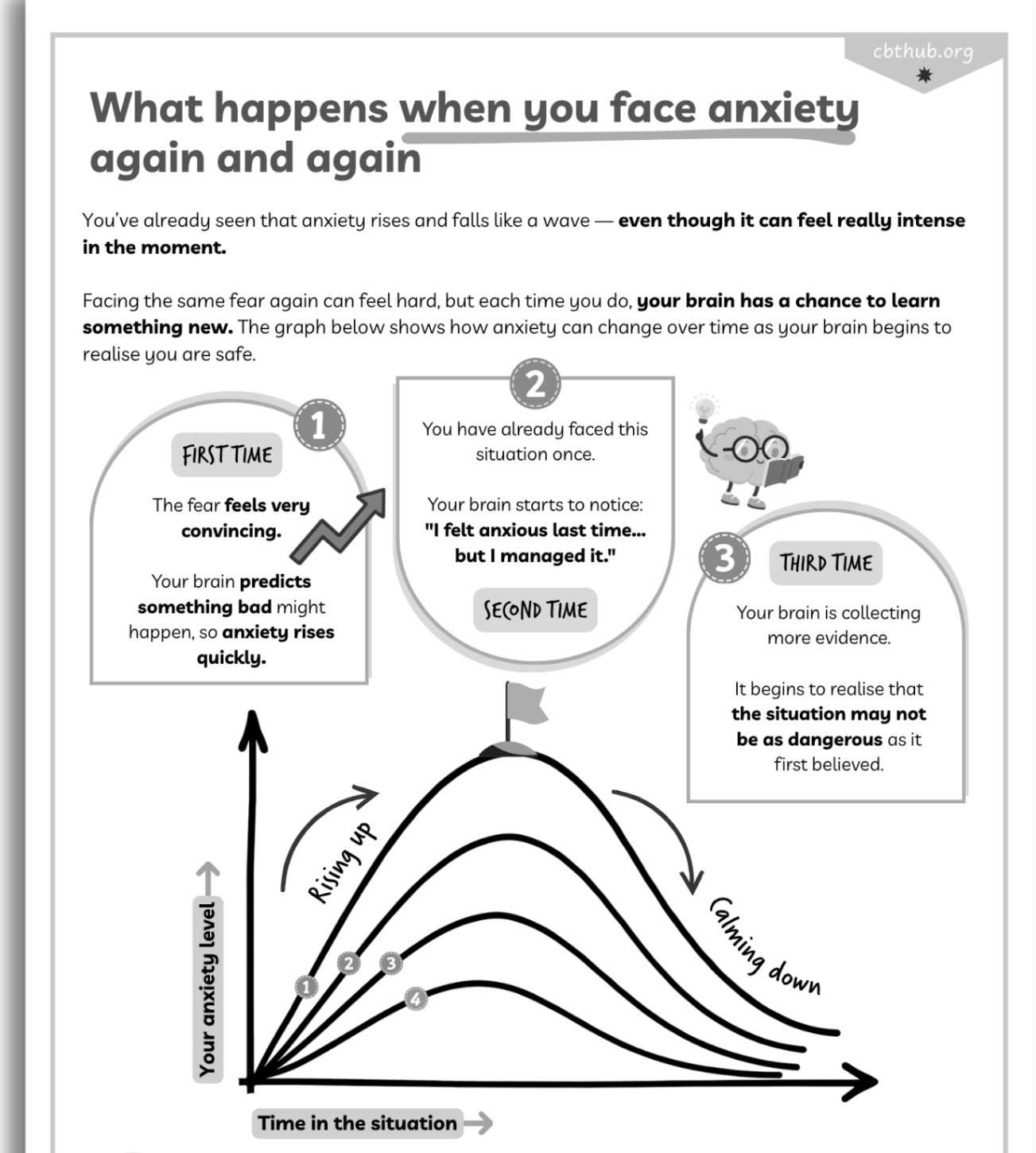
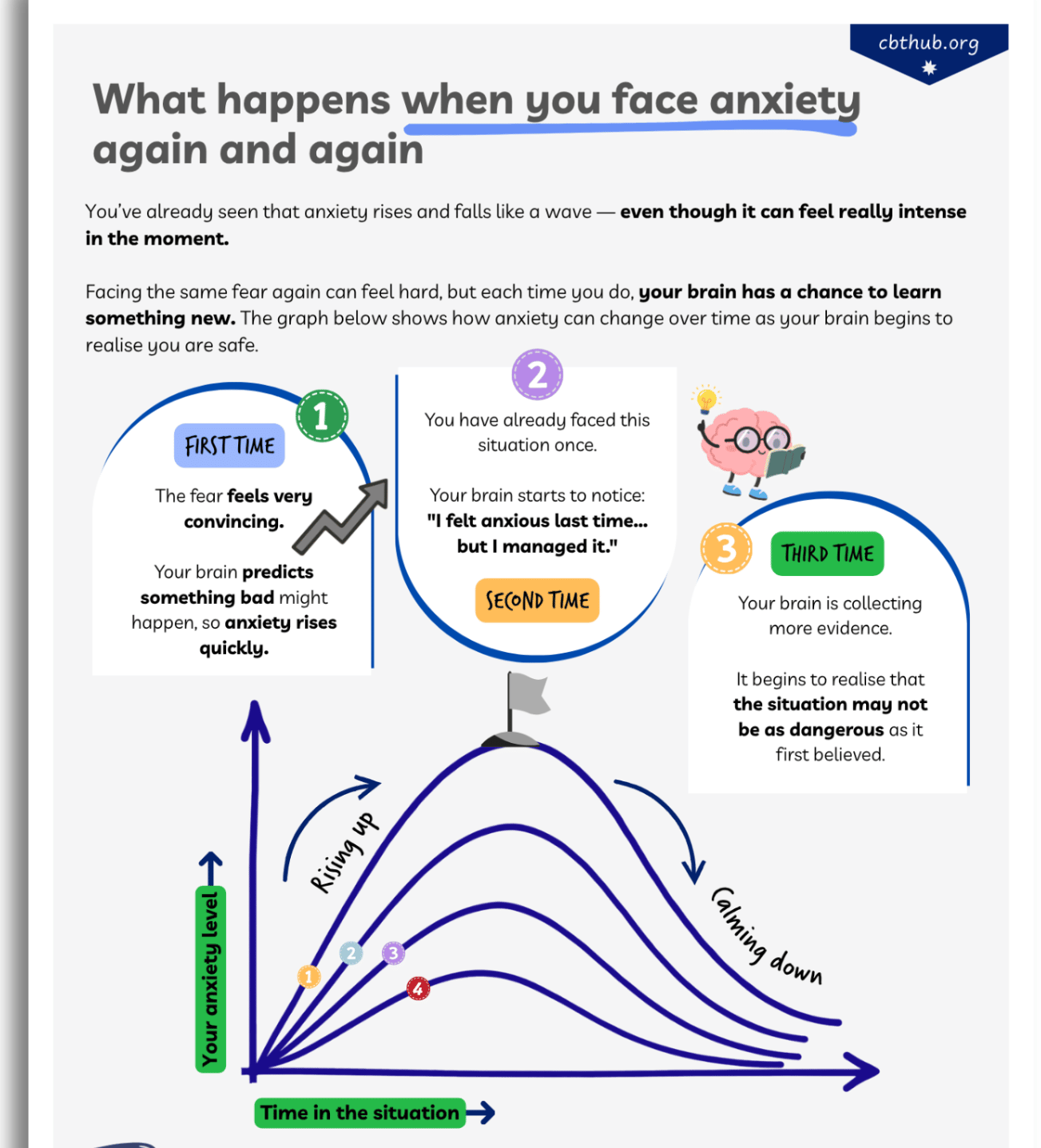
This resource explains how repeated exposure helps the brain learn that feared situations are not as dangerous as they first appear.
It is designed to support therapists in building motivation for exposure, helping young people understand how learning develops over time through repeated experiences.
References and Further Reading
- Caron, A., & Robin, J. (2010). Engagement of adolescents in cognitive–behavioral therapy for obsessive–compulsive disorder. PsycNET.
- Derisley, J., Heyman, I., Robinson, S., & Turner, C. (2008). Breaking free from OCD: A CBT guide for young people and their families. Jessica Kingsley Publishers.
- Franklin, M. E., Freeman, J. B., & March, J. S. (2018). Treating OCD in children and adolescents: A cognitive-behavioral approach. Guilford Press.
- Kaiser, B., & Bouvard, M. (2009). Obsessive-compulsive disorder in children and adolescents: Efficacy of combined treatment. Clinical Neuropsychiatry.
- Kircanski, K., Peris, T. S., & Piacentini, J. C. (2011). Cognitive-behavioral therapy for obsessive-compulsive disorder in children and adolescents. Journal of Child and Adolescent Psychiatric Clinics of North America, 20(2), 239–254.
- Krebs, G., Volz, C., & Turner, C. (2018). OCD: Tools to help you fight back!. Jessica Kingsley Publishers.
- Riggin, B. M., & Lack, C. W. (2016). Cognitive-behavioral therapy for youth with obsessive-compulsive and related disorders. Current Psychiatry Reviews.
- Van Noppen, B., Sassano-Higgins, S., Appasani, R., et al. (2021). Cognitive-behavioral therapy for obsessive-compulsive disorder: 2021 update. Focus, 19(4).
- Wagner, A. P. (2003). Cognitive-behavioral therapy for children and adolescents with obsessive-compulsive disorder. Brief Treatment and Crisis Intervention.