


Same body signs, different meanings
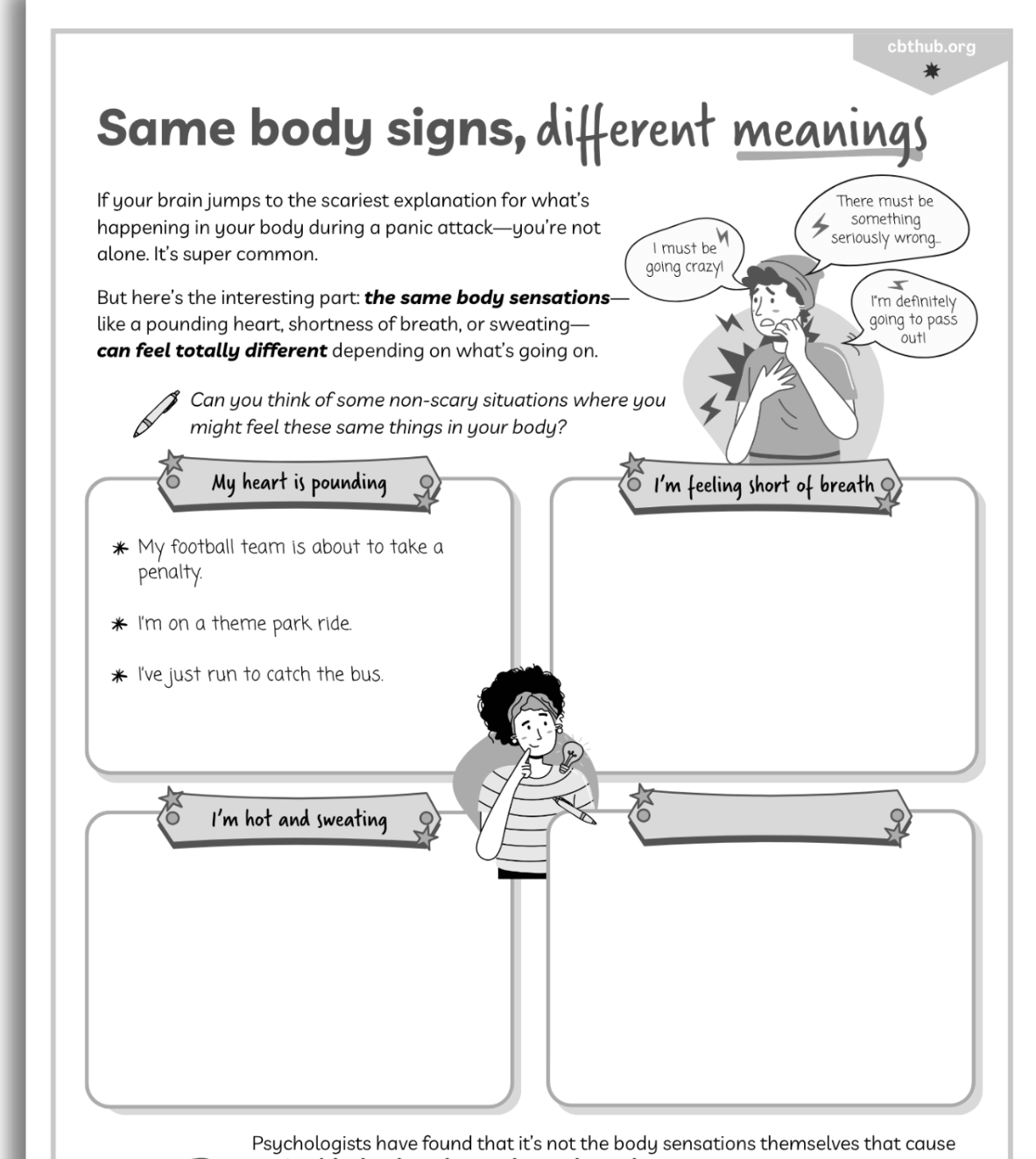
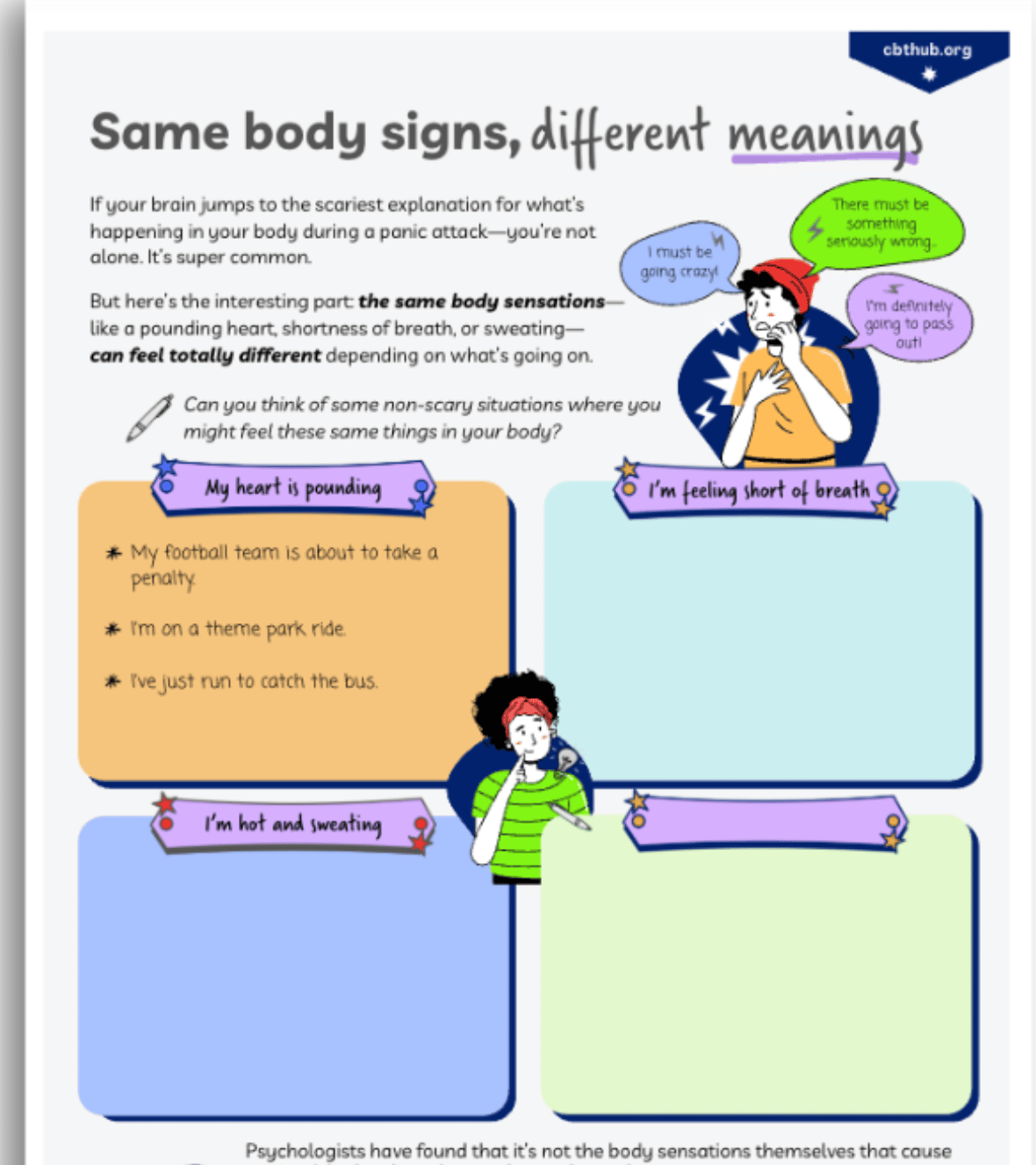
This resource highlights a core concept from Clark’s cognitive model of panic: that it’s not the physical sensations themselves that cause panic, but the meanings we attach to them. It supports young people in recognising how identical bodily symptoms—such as a pounding heart, shortness of breath, or sweating—can feel alarming in one context and completely normal in another.
It is designed to help therapists explore cognitive misinterpretations with young people, build insight into alternative (non-threatening) explanations, and challenge automatic catastrophic thoughts. The worksheet offers space for reflection and psychoeducation, reinforcing that the interpretation of symptoms—not the symptoms themselves—drives the panic response.
References and Further Reading
- American Psychiatric Association. Diagnostic and statistical manual of mental disorders, 5th edn Arlington, Virginia: American Psychiatric Association, 2013.
- Baker, H. and Waite, P. (2020) The identification and psychological treatment of panic disorder in adolescents: a survey of CAMHS clinicians. Child and Adolescent Mental Health, 25 (3). pp. 135-142
- Barlow, D.H., Raffa, S.D. and Cohen, E.M., 2002. Psychosocial treatments for panic disorders, phobias, and generalized anxiety disorder. A guide to treatments that work, 2, pp.301-336.
- Clark, D.M., Salkovskis, P.M., Hackmann, A., Wells, A., Ludgate, J. and Gelder, M., 1999. Brief cognitive therapy for panic disorder: a randomized controlled trial. Journal of Consulting and Clinical Psychology, 67(4), p.583.
- Craske, M. G., & Barlow, D. H. (2001). Panic disorder and agoraphobia. In D. H. Barlow (Ed.), Clinical handbook of psychological disorders: A step-by-step treatment manual(3rd ed., pp. 1–59). The Guilford Press.