


Panic cognitive model 2
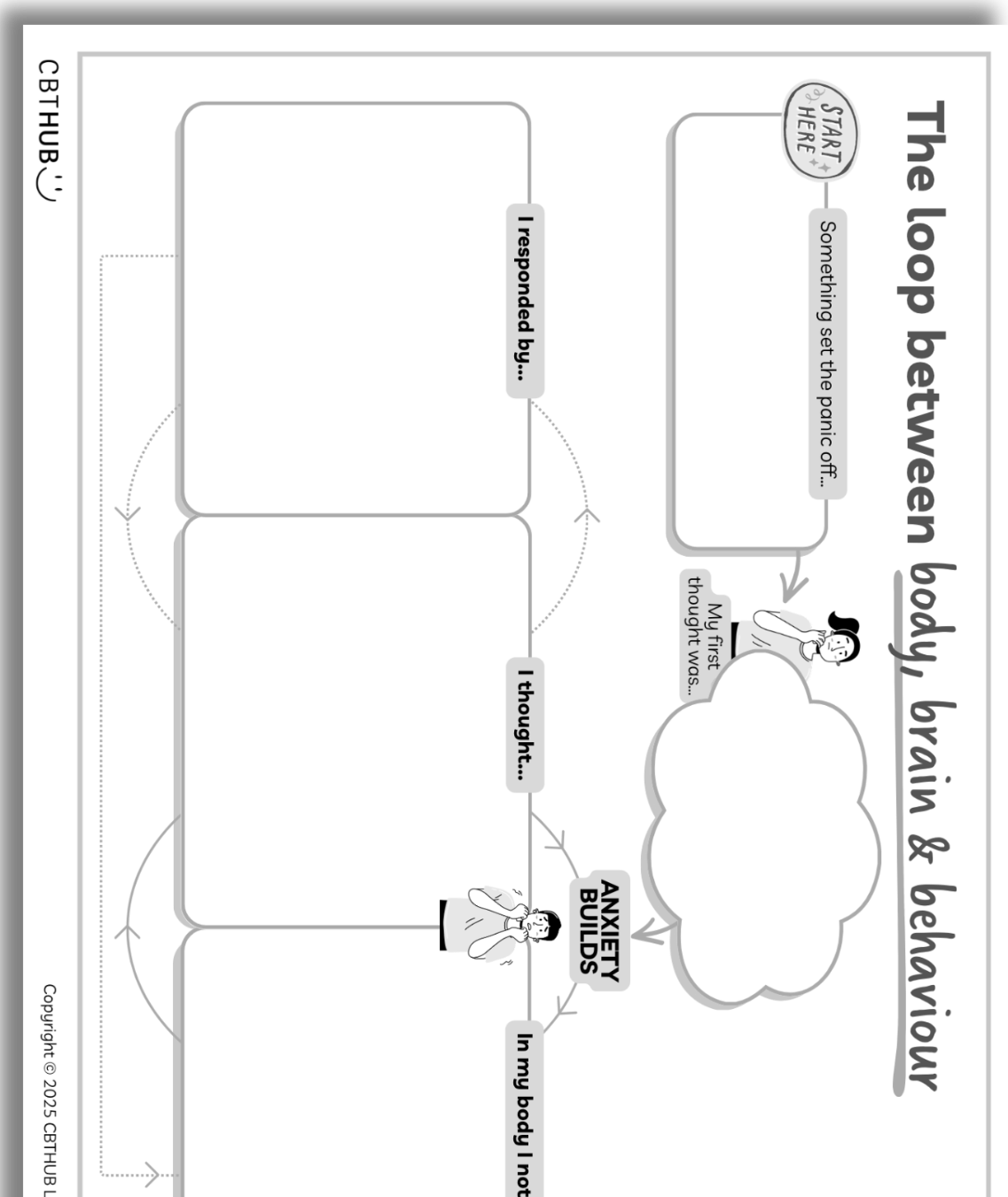
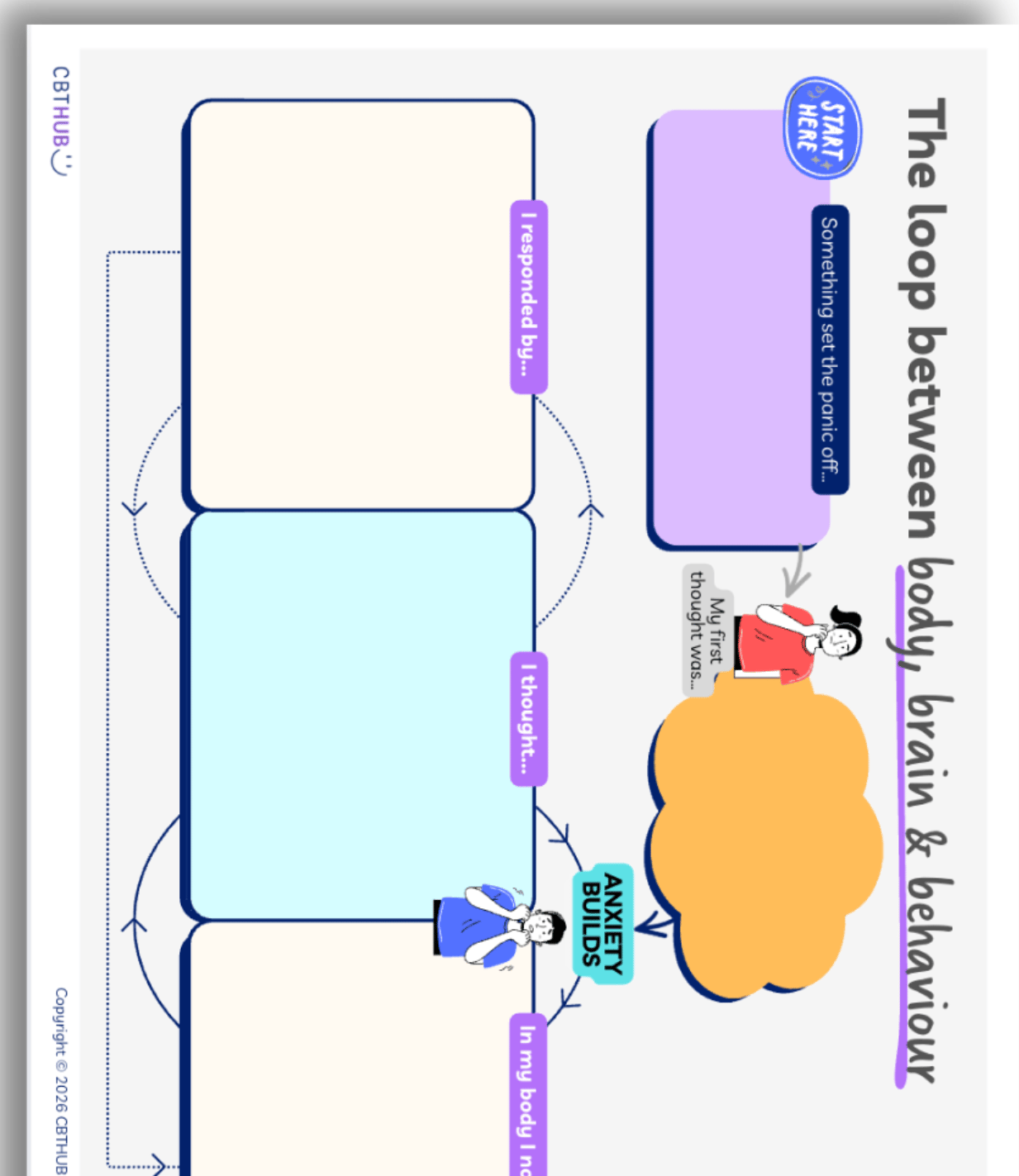
This resource supports the formulation of a panic episode by tracking the interaction between triggering events, automatic thoughts, physiological sensations, and behavioural responses.
It is designed to support therapists in collaboratively identifying maintenance cycles and reinforcing the link between thoughts, bodily sensations, and behaviours. The tool encourages reflection on how panic builds and is maintained—helping young people externalise the experience, make sense of the feedback loop, and consider opportunities for intervention.
References and Further Reading
- American Psychiatric Association. Diagnostic and statistical manual of mental disorders, 5th edn Arlington, Virginia: American Psychiatric Association, 2013.
- Baker, H. and Waite, P. (2020) The identification and psychological treatment of panic disorder in adolescents: a survey of CAMHS clinicians. Child and Adolescent Mental Health, 25 (3). pp. 135-142
- Barlow, D.H., Raffa, S.D. and Cohen, E.M., 2002. Psychosocial treatments for panic disorders, phobias, and generalized anxiety disorder. A guide to treatments that work, 2, pp.301-336.
- Clark, D.M., Salkovskis, P.M., Hackmann, A., Wells, A., Ludgate, J. and Gelder, M., 1999. Brief cognitive therapy for panic disorder: a randomized controlled trial. Journal of Consulting and Clinical Psychology, 67(4), p.583.
- Craske, M. G., & Barlow, D. H. (2001). Panic disorder and agoraphobia. In D. H. Barlow (Ed.), Clinical handbook of psychological disorders: A step-by-step treatment manual(3rd ed., pp. 1–59). The Guilford Press.