


Thought spotting
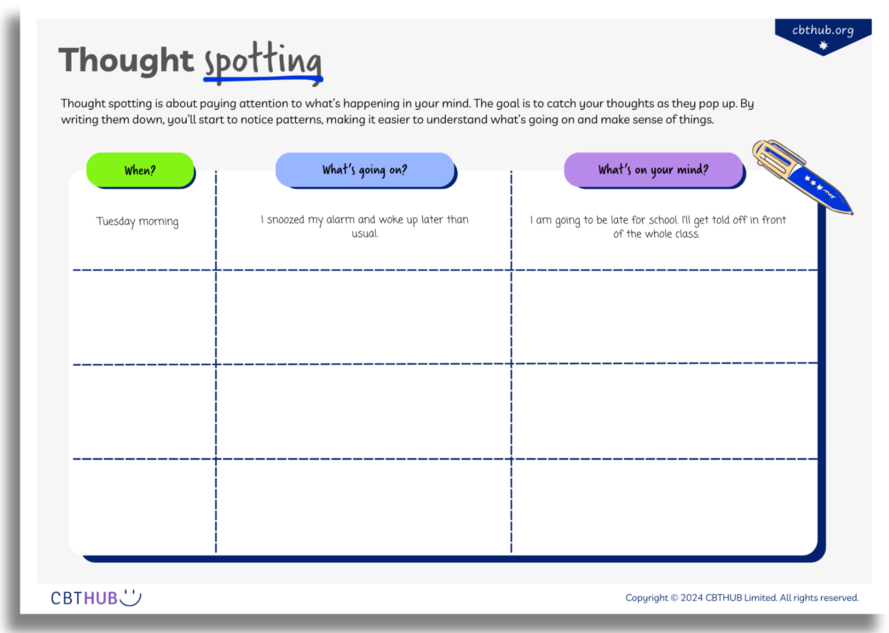
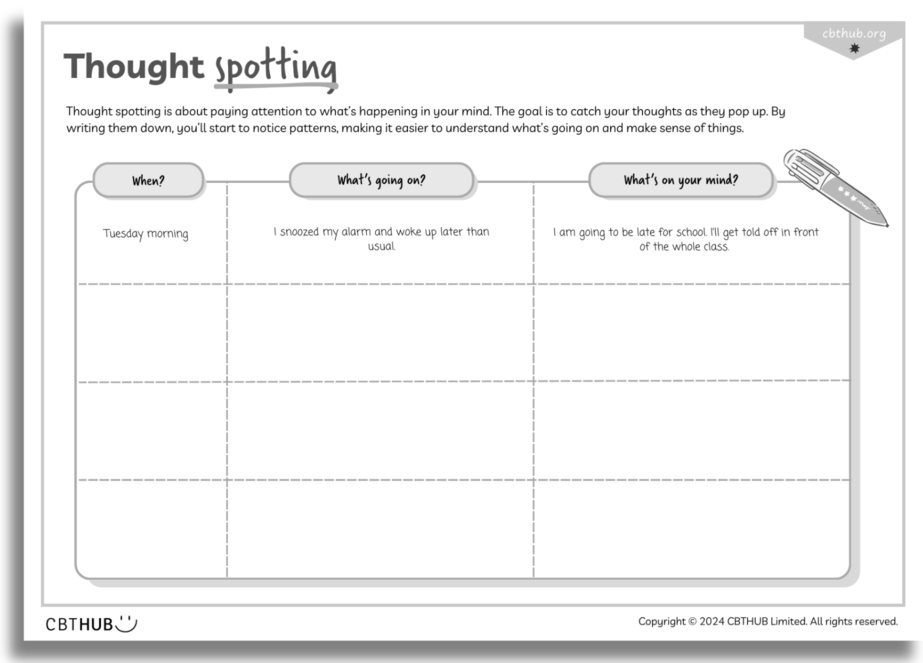
This worksheet is a simple thought diary designed to support self-monitoring in CBT. It features columns for Date, Situation, and Thought, making it easy for young people to track their experiences.
Self-monitoring is a vital CBT skill that builds awareness of cognitive, emotional, and behavioural patterns, helping individuals recognise the connections between them. Through this process, young people can gain insight into how their thoughts influence feelings and actions, laying a foundation for positive change.
References and Further Reading
- Proudfoot, J., & Nicholas, J. (2010). Monitoring and evaluation in low intensity CBT interventions. Oxford guide to low intensity CBT interventions, 97-104.
- Craske, M. G., & Tsao, J. C. I. (1999). Self-monitoring with panic and anxiety disorders. Psychological Assessment, 11(4), 466–479.
- Cohen, J.S., Edmunds, J.M., Brodman, D.M., Benjamin, C.L., Kendall, P.C. (2013). Using self-monitoring: implementation of collaborative empiricism in cognitive-behavioral therapy. Cognitive and Behavioral Practice, 20(4), 419-428.