


In 2022, NICE published updated guidance on the assessment, management, and prevention of self-harm (NG225). The guideline applies across ages and settings, including work with children and young people, and replaces earlier guidance that many clinicians trained under.
At first glance, NG225 may look like a comprehensive update of procedures and pathways. But read more closely, it represents something more significant: a clear shift away from prediction-focused risk management and towards collaborative, formulation-led, and relationship-based care.
This blog reflects on what NG225 offers practitioners working with children and young people — and where it challenges familiar habits in clinical work.
From Risk Prediction to Understanding
One of the most explicit shifts in NG225 is its position on risk assessment tools.
The guideline states clearly that tools and scales should not be used to predict future suicide or repetition of self-harm, nor to determine access to treatment or discharge decisions. Instead, NICE emphasises the importance of risk formulation as part of a broader psychosocial assessment
For clinicians, this aligns with what many already experience in practice: that numerical scores rarely capture the complexity of a young person’s distress, context, or protective factors.
Rather than asking “How risky is this young person?”, NG225 encourages us to ask:
- What function does self-harm serve for this person?
- What vulnerabilities and strengths are present?
- What has changed recently — and what might be coming next?
This represents a move towards understanding rather than classification.
Psychosocial Assessment as a Therapeutic Process
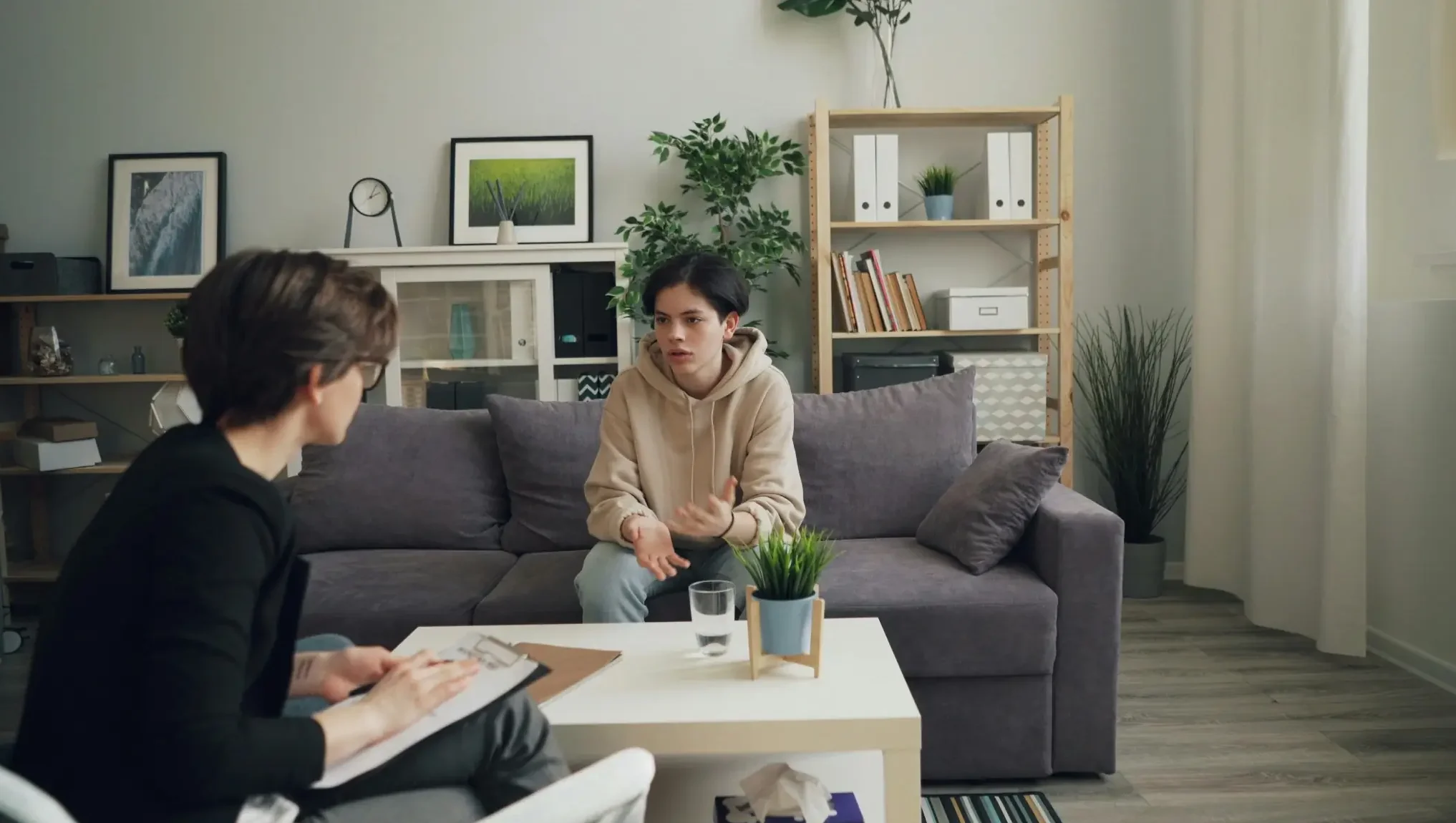
NG225 places strong emphasis on the psychosocial assessment, not simply as an information-gathering exercise, but as the beginning of a therapeutic relationship.
For children and young people, the guideline highlights the importance of:
- Developmentally appropriate assessment
- Exploration of peer, school, family, and online contexts
- Recognition that reasons for self-harm may vary between episodes
- Involvement of appropriately experienced mental health professionals
Crucially, the assessment is framed as a collaborative process — one that supports meaning-making, rather than interrogation.
This has important implications for how we structure sessions, pace conversations, and introduce tools or worksheets. If assessment is therapeutic, then clarity of language, emotional safety, and relational attunement matter as much as clinical coverage.
Moving Away from “Tick-Box” Safety Planning
Safety planning features prominently in NG225, but again with an important emphasis on how it is done.
The guideline stresses that safety plans should be:
- Developed collaboratively
- Written with the young person, not for them
- Accessible, flexible, and revisited over time
- Focused on coping, support, and reducing barriers — not just crisis contacts
This challenges more procedural approaches to safety planning that can feel tokenistic or overwhelming, particularly for young people experiencing shame, fear, or cognitive overload.
Used well, safety planning becomes an extension of formulation and problem solving — not a standalone task.
Context, Constraint, and Collaboration
Another strength of NG225 is its attention to contextual realities.
The guideline recognises that children and young people:
- May have limited autonomy over their environment
- Are embedded in family, school, and social systems
- May experience barriers related to neurodevelopmental differences, discrimination, or stigma
Involving families and carers is encouraged where appropriate, but always with attention to consent, safeguarding, and the young person’s wishes.
This reinforces the importance of flexible, context-aware intervention planning — and cautions against assuming that engagement difficulties reflect motivation rather than constraint.
What This Means for Everyday Practice
For many experienced clinicians, NG225 will feel validating rather than revolutionary.
It supports practice that is:
- Formulation-led rather than score-led
- Curious rather than predictive
- Collaborative rather than procedural
- Grounded in relationship, not just protocol
At the same time, it invites reflection on where systems, documentation demands, or inherited habits may still pull us towards risk labelling rather than understanding.
Concluding Reflections
NG225 does not offer a simple checklist for managing self-harm. Instead, it reinforces a way of working that prioritises understanding, collaboration, and proportionate care.
For children and young people, this matters.
When self-harm is approached through formulation, context, and compassion — rather than prediction and categorisation — therapy is more likely to feel containing, meaningful, and safe.
As services continue to adapt to this guidance, there is an opportunity to ensure that our tools, language, and interventions genuinely support the kind of practice NICE is advocating for.
References & Further Reading
- National Institute for Health and Care Excellence. (2022). Self-harm: assessment, management and preventing recurrence (NG225). NICE.
- NHS England. (2025). Staying safe from suicide. NHS England.
- National Confidential Inquiry into Suicide and Safety in Mental Health. (n.d.). Risk assessment scales should not be used to predict future suicidal behaviour. University of Manchester.
- Albaum, C., et al. (2025). Safety planning interventions for suicide prevention in children and adolescents: a systematic review and meta-analysis. JAMA Pediatrics.
- Johansson, B. A., et al. (2025). Effects of interventions for self-harm in children and adolescents. European Child & Adolescent Psychiatry.
- Kothgassner, O. D., et al. (2021). Efficacy of dialectical behavior therapy for adolescent self-harm and suicidal ideation: a systematic review and meta-analysis. Psychological Medicine.
- Syversen, A. M., et al. (2024). Evaluation of dialectical behavior therapy for adolescents in routine clinical practice. BMC Psychiatry.
- University of Melbourne. (2026). Suicide and non-suicidal self-injury in children and young people: evidence-based clinical practice guideline (Version 1). University of Melbourne.
- Gryglewicz, K., et al. (2024). Translating suicide safety planning components into the design features of apps. JMIR Mental Health.
- de Boer, K., et al. (2025). Facilitators and barriers for implementing co-designed interventions for suicidal and self-harming young people: a systematic review. Journal of Adolescence.