


Thinking Detective Skills (Blank Log)
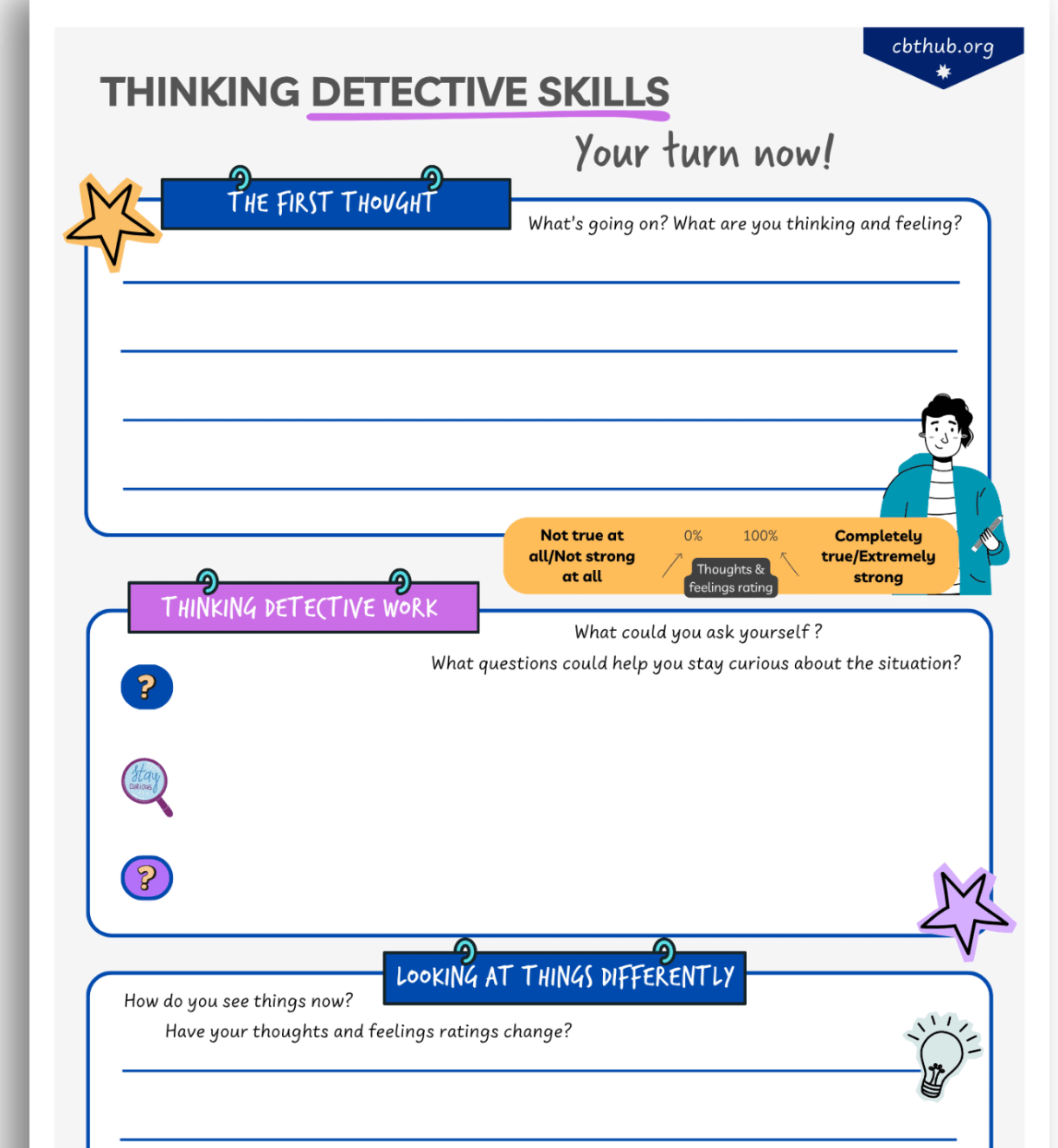
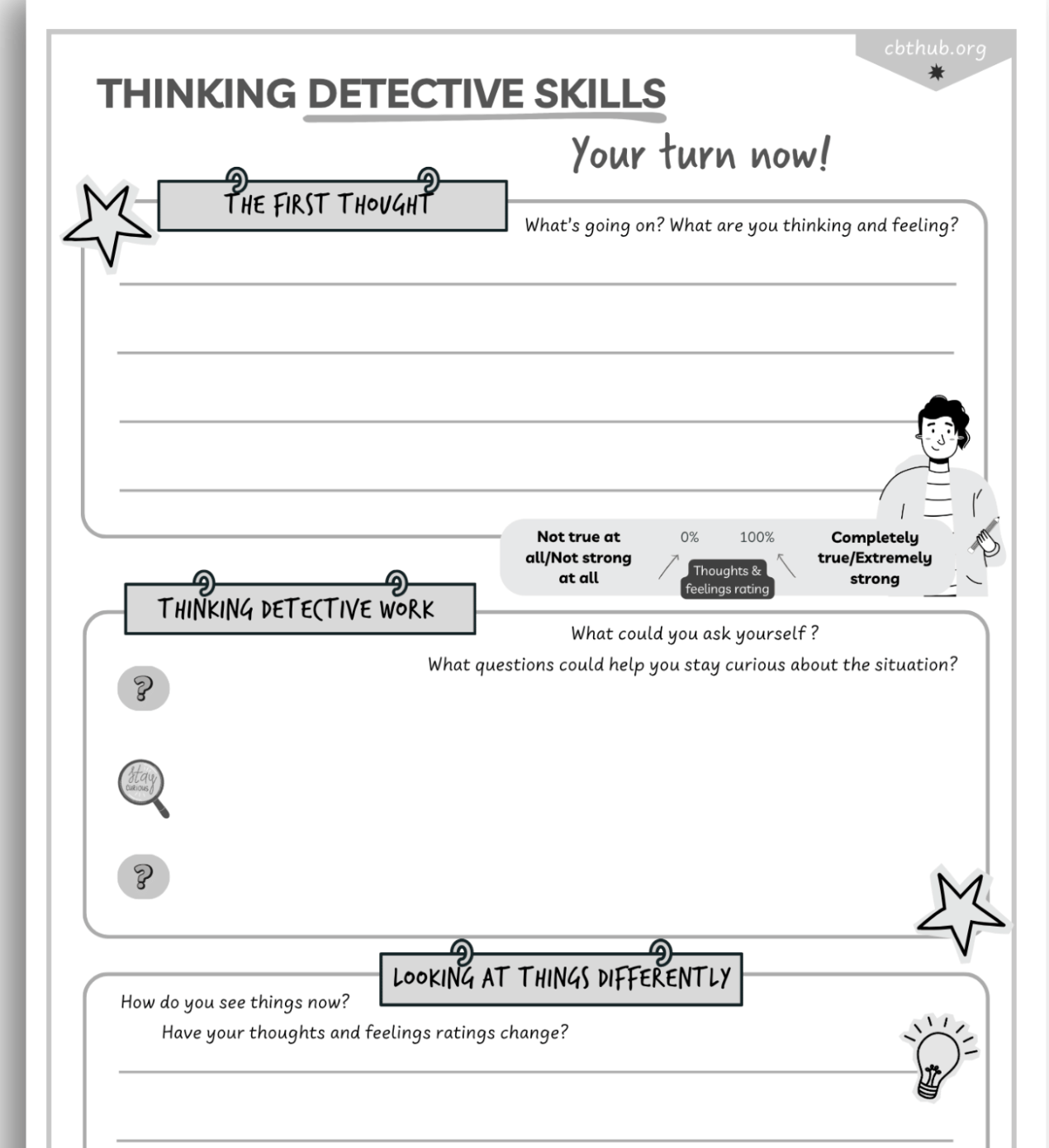
This worksheet helps young people practise noticing, questioning, and responding to unhelpful thoughts using a structured CBT “thinking detective” approach. It encourages curiosity about thoughts, supports emotional awareness, and introduces cognitive restructuring through guided reflection and thought rating exercises.
References and Further Reading
- Stallard, P. (2002). Think Good – Feel Good: A cognitive behaviour therapy workbook for children and young people. Chichester: John Wiley & Sons.
- Oxford Guide to Brief and Low Intensity Interventions for Children and Young People (Oxford Guides to Cognitive Behavioural Therapy). (2022, July 18). Paperback.
- Beck, A. T., & Beck, J. S. (1995). Cognitive therapy: Basics and beyond. New York: Guilford.
- Beck, A. T., Rush, A. J., Shaw, B. F., & Emery, G. (1979). Cognitive therapy of depression. New York: Guilford.