


Put Your Thought on the Scales – Example
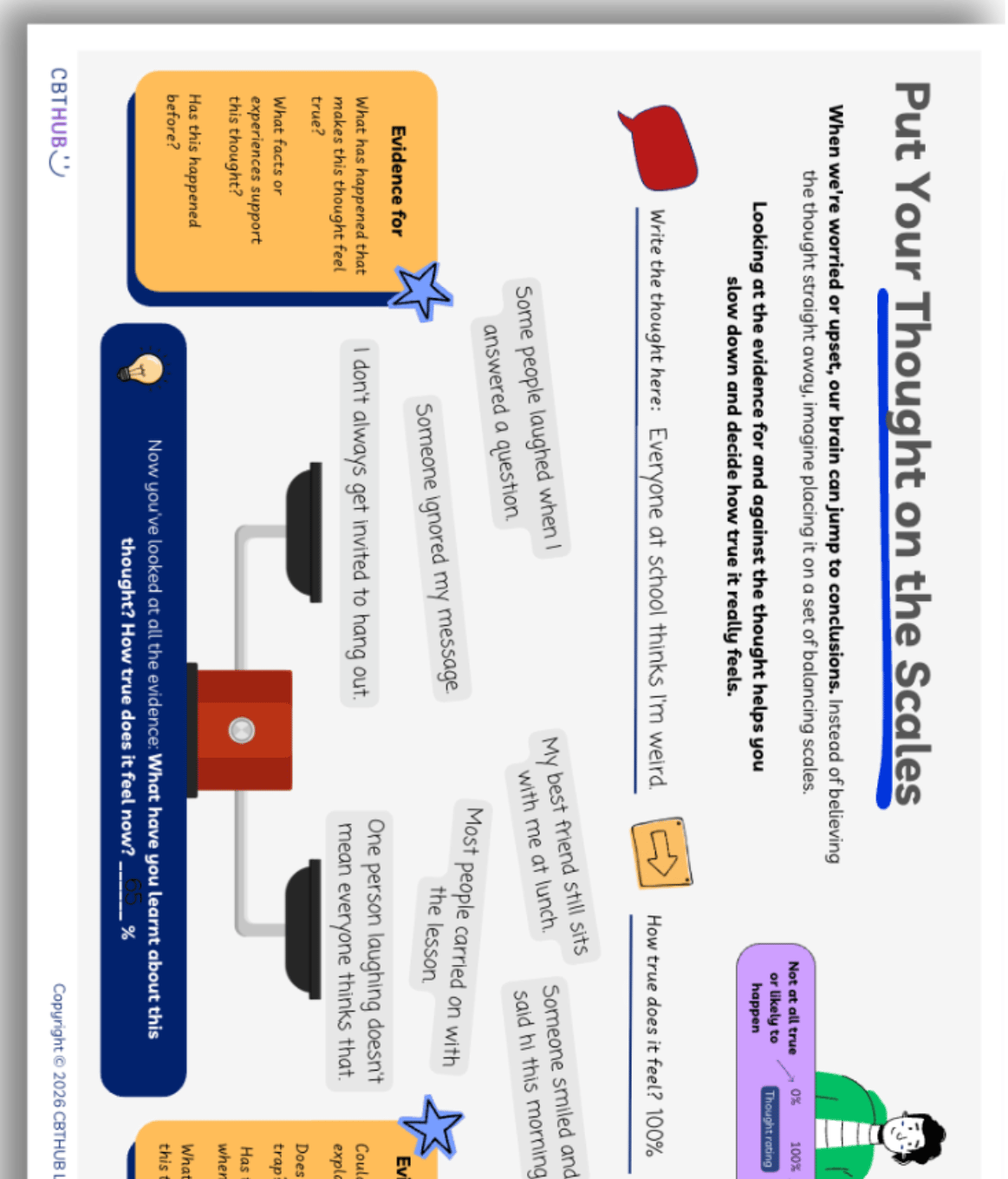
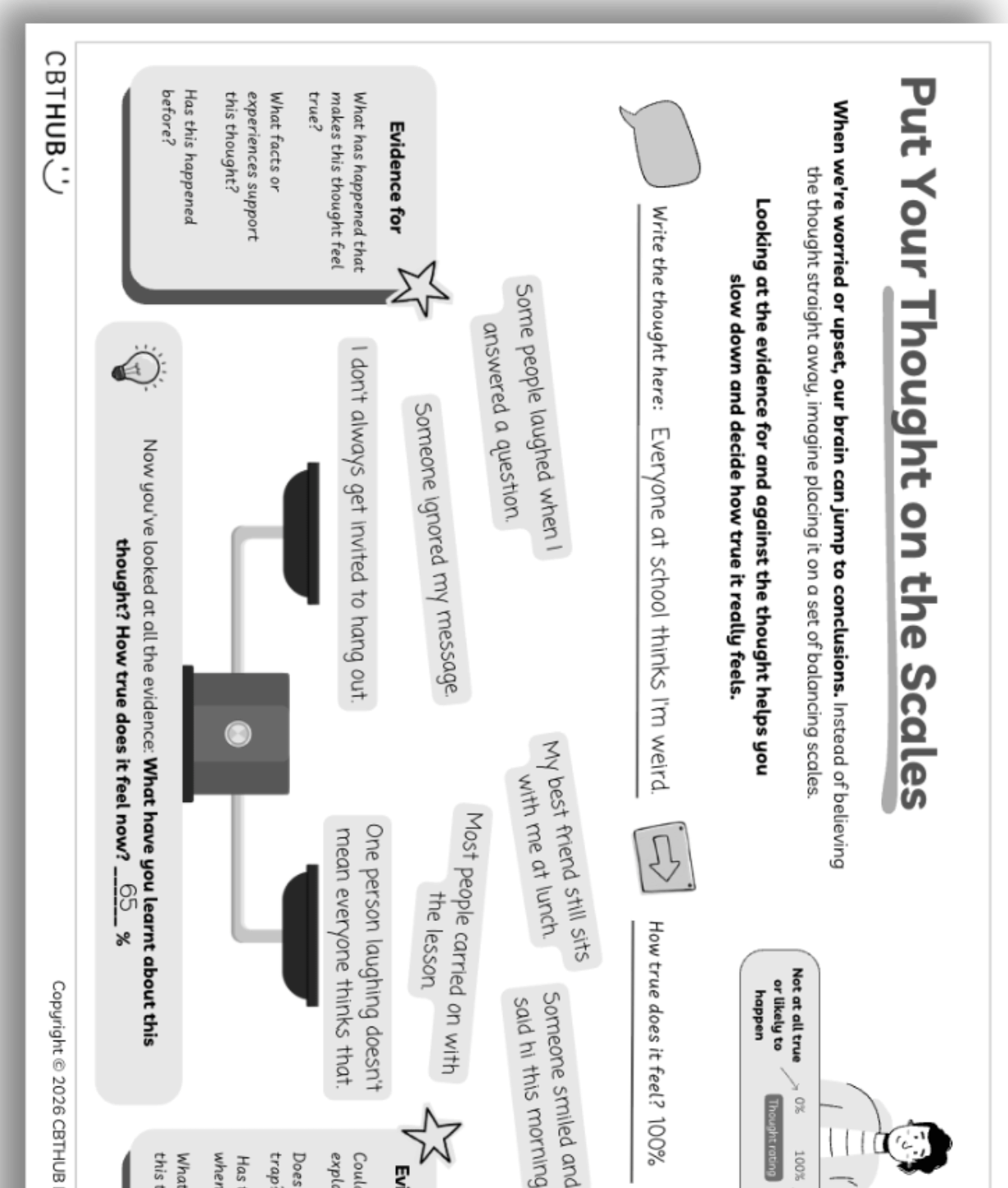
This completed CBT example shows young people how to examine the evidence for and against an unhelpful thought. Using balancing scales, it demonstrates how to rate a thought, consider information from both sides and decide how true the thought feels after reviewing all the evidence.
The worked example helps therapists introduce cognitive restructuring in a clear and relatable way. It can be used before completing the blank worksheet to model balanced thinking and show that thoughts are not always facts.
References and Further Reading
- Stallard, P. (2002). Think Good – Feel Good: A cognitive behaviour therapy workbook for children and young people. Chichester: John Wiley & Sons.
- Oxford Guide to Brief and Low Intensity Interventions for Children and Young People (Oxford Guides to Cognitive Behavioural Therapy). (2022, July 18). Paperback.
- Beck, A. T., & Beck, J. S. (1995). Cognitive therapy: Basics and beyond. New York: Guilford.
- Beck, A. T., Rush, A. J., Shaw, B. F., & Emery, G. (1979). Cognitive therapy of depression. New York: Guilford.